
Migraine and energy-limiting conditions: what connects them, and what you can do
What Dr. Ancha Baranova explained in Welltory's webinar: how migraine is diagnosed, its four phases, status migrainosus and silent migraine, how triptans, CGRP and PACAP drugs work, hormones, and why migraine overlaps with ME/CFS and long COVID.

Short answer
Migraine is not "just a bad headache". It is a neurological disorder with its own diagnostic criteria, its own patterns, and its own biology. For people living with energy-limiting conditions (ELC) such as ME/CFS or long COVID, it often gets as important as the fatigue. In a small study of people with chronic fatigue syndrome, 84% met criteria for migraine, against 5% of healthy controls (Ravindran et al., 2011). In Welltory's webinar, Dr. Ancha Baranova explained one of the reasons CFS and migraine co-occur. In a nutshell, a migraine attack is a consequence of brain overload. The brain may run short of energy for the load it is carrying, resulting in a painful "brownout". That idea has been described in a major review where the major cause of migraine was attributed to a temporary mismatch between the brain's energy reserve and its workload (Gross et al., 2019).
The migraine is not your fault, and you are not imagining the link to fatigue. If your worst migraines land after the days you pushed through, or a crash and a migraine seem to arrive together, that is a pattern known to doctors and researchers, not a sign of weakness. Before you blame yourself, check the records of what your body experiences right before a particular migraine bout: the pattern of lack of sleep and extra load, both mental and physical, which is recognizable in the days before the attack, usually tells a clearer story than memory.
Watch the webinar. This article is based on Welltory's webinar with Dr. Ancha Baranova, School of Systems Biology, George Mason University, held on October 28, 2026. Watch the full recording on YouTube. Dr. Baranova is a medical advisor to Welltory's Energy Lab and Migraine Lab communities; her views in the webinar are her own.
If you want to work this out with other women who live with CFS and migraine, Welltory runs 2 paid peer-support programs: join Migraine Lab here if migraine is your main struggle (what Migraine Lab is, who it is for, and what it costs), or join Energy Lab here if crashes and low energy come first (what Energy Lab is, who it is for, and what it costs). Both programs are education and peer support, not medical care.


Work out your early warning signs with women who get it
Welltory Migraine Lab is a paid, moderated online community for women 18 to 65 living with migraine. Opens December 1, 2026. Peer support and education, not medical care.
How common is migraine?
Very common. The Global Burden of Disease study estimated that about 1.04 billion people worldwide had migraine in 2016, and that migraine accounted for 45.1 million years lived with disability that year (GBD 2016 Headache Collaborators, 2018). Dr. Ancha Baranova added that recorded numbers depend on the particular country and on who gets diagnosed, so the real picture is likely wider still. Ancha lives with migraine herself, so for her this is more than a research topic.
Not every headache is a migraine
Headache and migraine are not synonyms. The International Classification of Headache Disorders, third edition (ICHD-3), the reference neurologists use worldwide, splits headaches into 2 big families (ICHD-3).
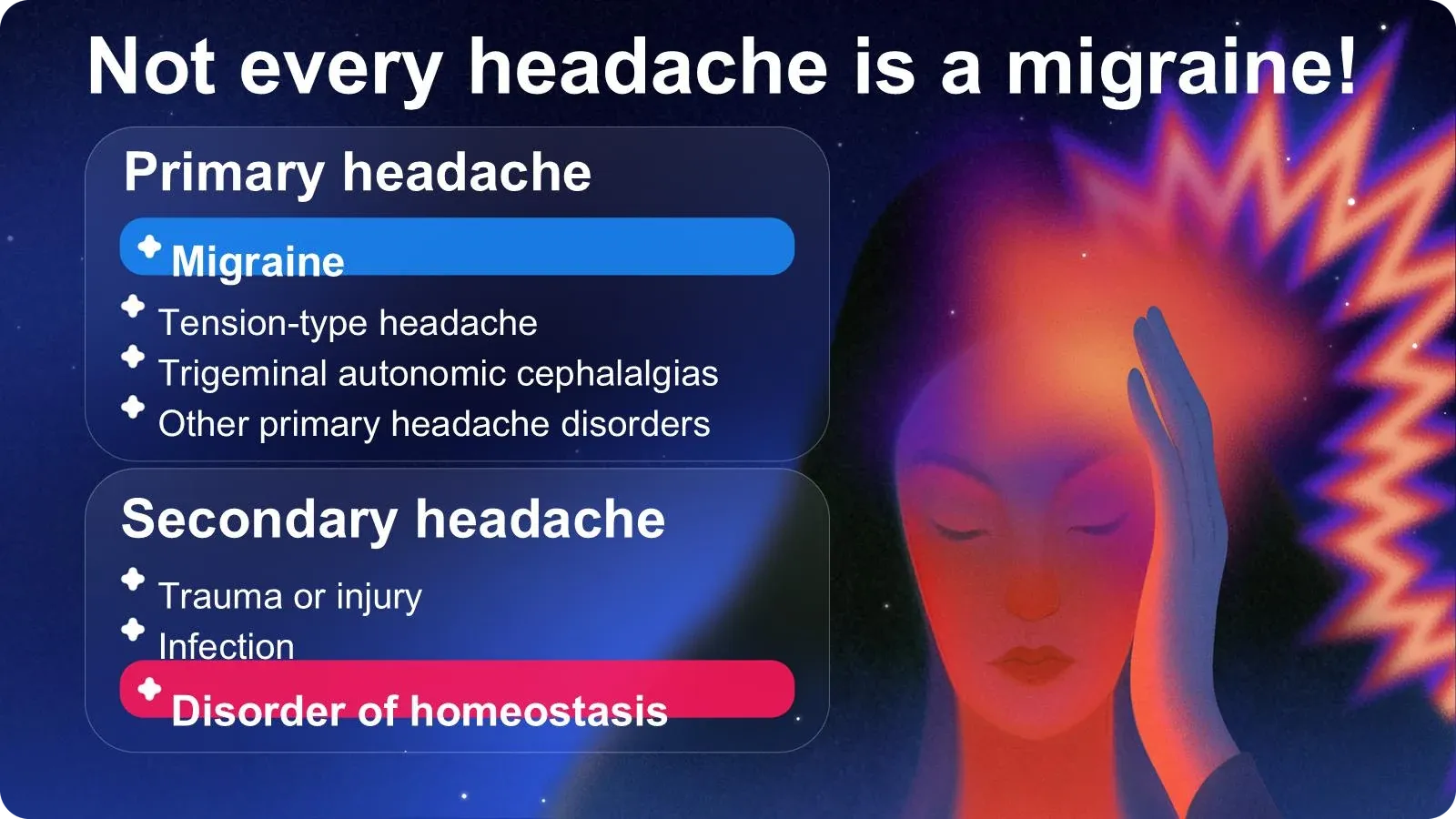
Primary headaches are disorders in their own right. Migraine is one of them, alongside tension-type headache, trigeminal autonomic cephalalgias (where the pain often sits around the eye and face), and other primary headaches.
Secondary headaches are a symptom of something else: a head or neck injury, an infection, use of a substance or its withdrawal, or what ICHD-3 calls a "disorder of homeostasis", a disturbance of the body's internal balance, for example, when oxygen drops low, during the period of fasting, or when the blood pressure spikes (ICHD-3, chapter 10). A headache associated with a respiratory infection is usually a symptom of that infection, not a new disease.
Why this matters for those who live with an energy-limiting condition
Dr. Baranova's practical point was about labels. If you come to a doctor with several complaints at once, she said, the headache may be filed as a symptom of the bigger illness, a secondary headache, rather than as migraine. The two are treated differently, so the label can change what you are offered. That is why your message to the doctor should be clear, concentrating on the pattern of headache, rather than on the laundry list of tests and symptoms.
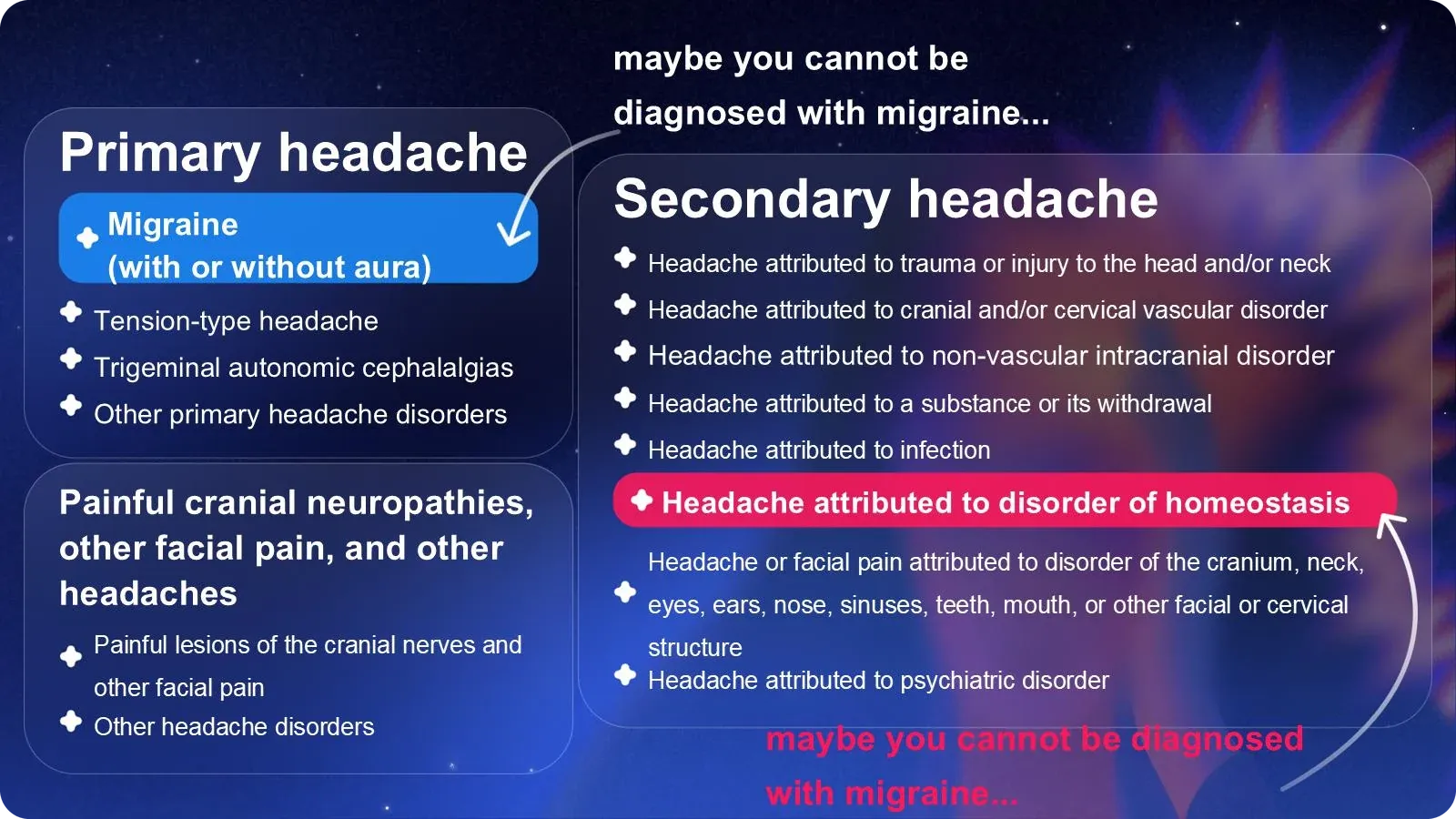
The classification itself leaves room for blurring the borders between the diseases. ICHD-3 says that when a pre-existing primary headache becomes chronic or clearly worsens (usually with at least a 2-fold rise in frequency or severity), or when its onset coincides with the pathophysiological break in homeostasis, both diagnoses should be recorded, as long as there is good evidence that the particular homeostatic disturbance is known to cause headache (ICHD-3, chapter 10). Knowing that, and describing your attacks to the doctor concisely, but as a whole, would help both you and your treating physician. The doctor would receive maximum information, and you would receive maximal benefits and the right answers.
How is migraine diagnosed? The ICHD-3 criteria
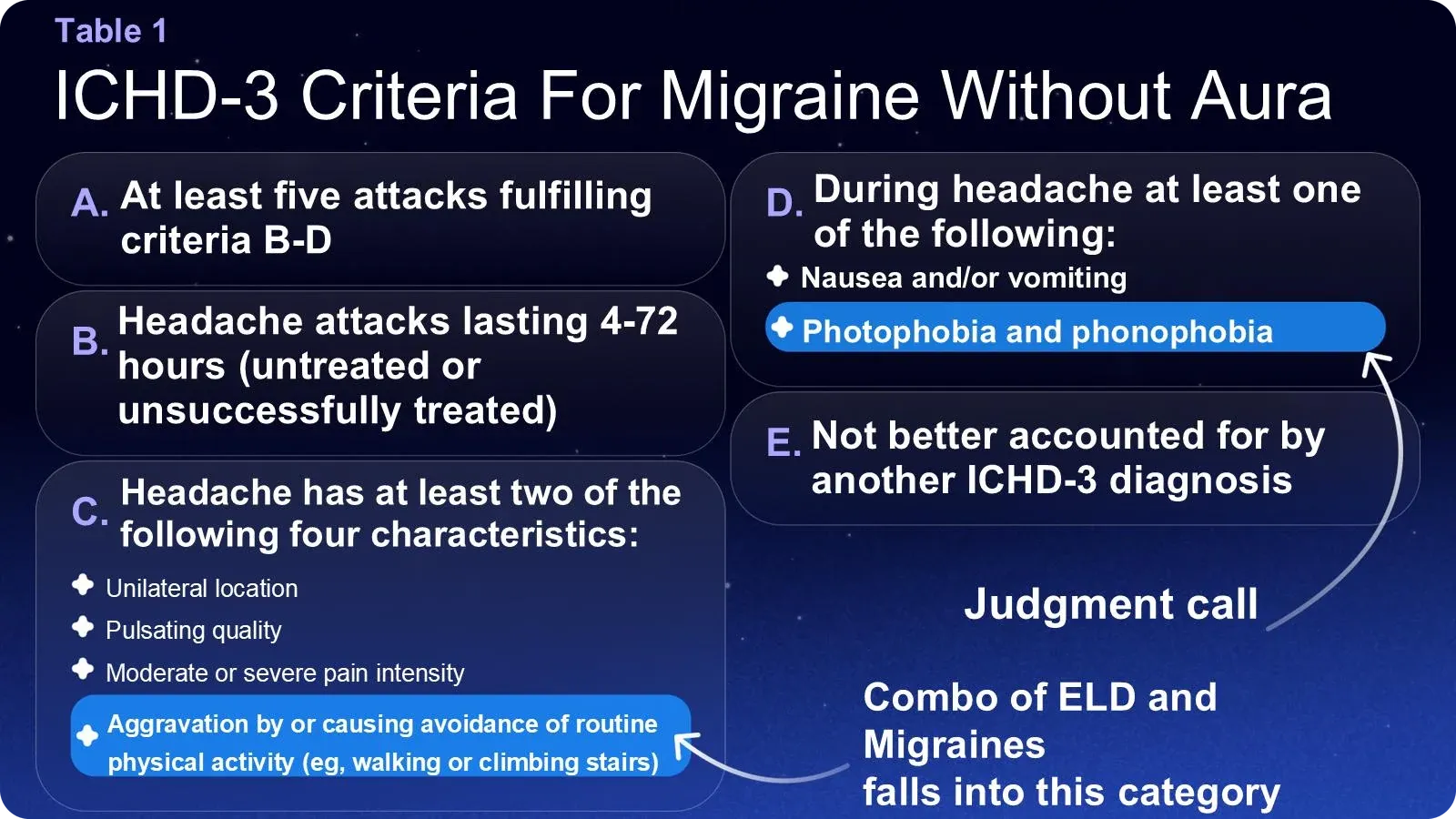
For migraine without aura, ICHD-3 asks for all of the following (ICHD-3):
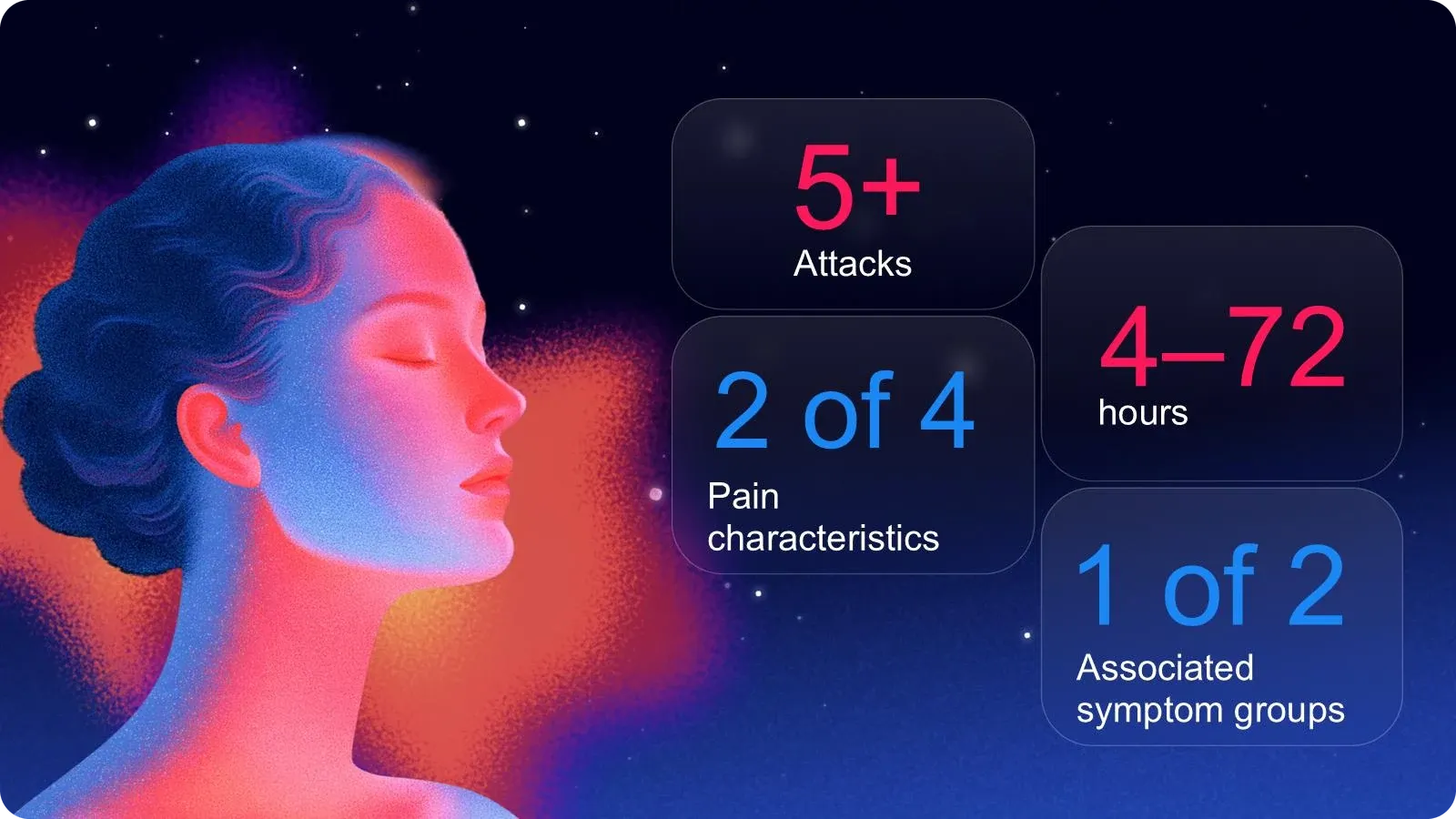
At least 5 attacks that fit the criteria below.
Each attack lasts 4 to 72 hours when untreated or unsuccessfully treated (2 to 72 hours in children and adolescents).
At least 2 of 4 pain features: one-sided, pulsating, moderate or severe, and made worse by (or making you avoid) routine physical activity such as walking or climbing stairs.
At least 1 of 2 symptom groups during the headache: nausea and/or vomiting, or sensitivity to both light and sound.
Not better accounted for by another ICHD-3 diagnosis.
Dr. Baranova called some of these criteria "judgment calls". Many people do not mention light sensitivity during a medical visit because they assume everyone squints at a lamp when their head hurts. And the last criterion, "not better accounted for by another diagnosis", is exactly where a migraine in someone with an energy-limiting condition may get weighed by the doctor into an incorrect category — into a symptom rather than a stand-alone disease that requires separate attention.
Why the 72-hour limit matters
3 days is a long time, but knowing about the upper limit is useful. A migraine attack that keeps going beyond 72 hours either has a name of its own, status migrainosus, or is a sign that something other than a typical migraine may be going on. Both need a doctor, as the sections below explain.
Why pushing through can make a migraine worse
One of the 4 pain features of the migraine is that the headache gets worse with striving to maintain our typical levels of routine activity. Dr. Baranova pointed out how often people tend to override their limits: there is a pending deadline, a child to pick up from school, a work shift to finish, so a mild migraine gets pushed through. Many people notice, she said, that the harder they push through, the harder the attack pushes back. She called this one of the clearest overlaps with energy-limiting conditions, where overdoing it on a good day leads to a larger payback later.
What are the 4 phases of a migraine?
A full migraine attack typically unfolds in 4 phases, though not everyone goes through all of them (Ferrari et al., 2022; NHS).
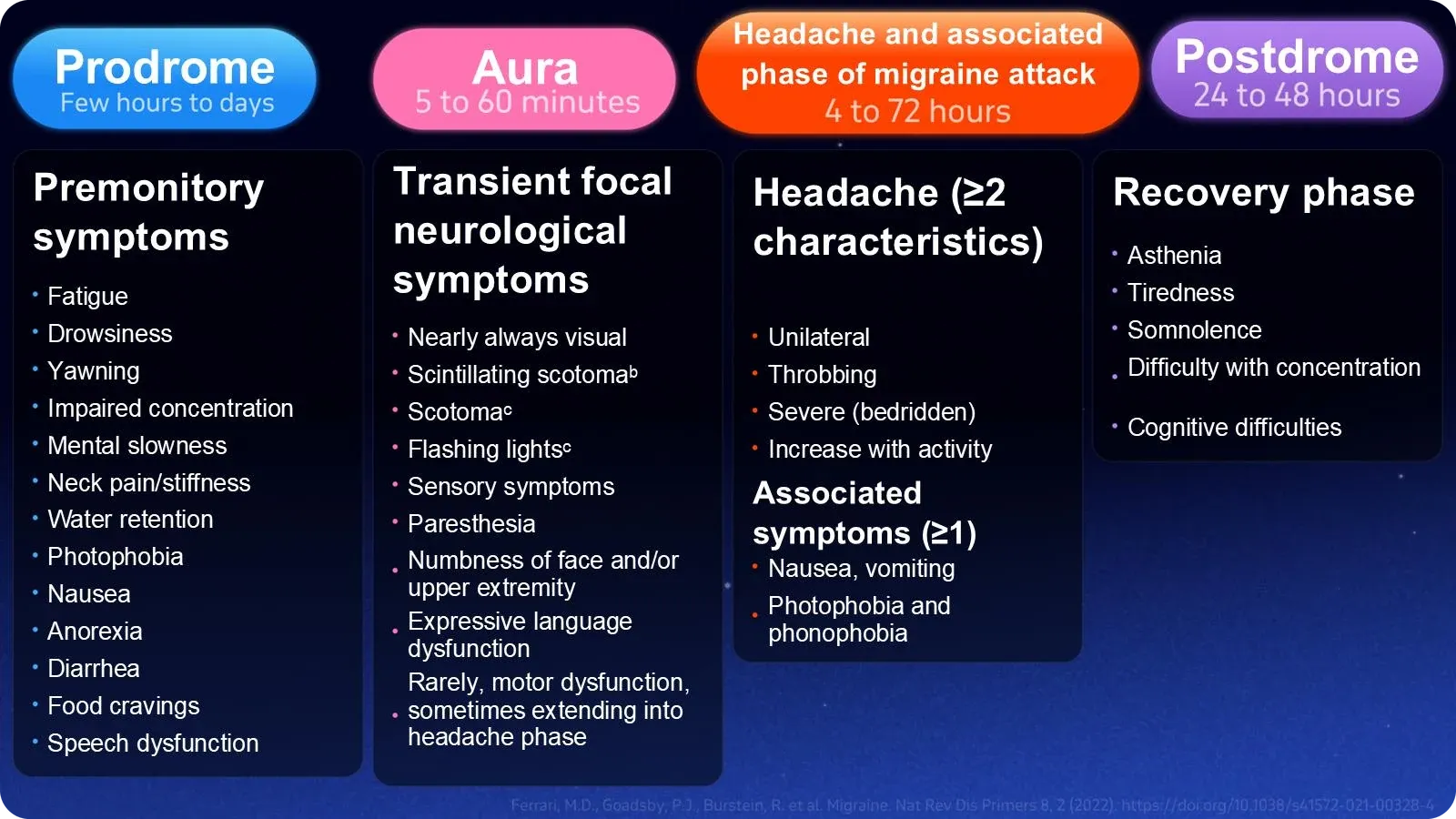
| Phase | Typical length | What it can feel like |
|---|---|---|
| Prodrome (premonitory phase) | Hours, up to about 2 days before the pain | Tiredness, yawning, poor concentration, neck stiffness, food cravings, thirst, mood change, sensitivity to light |
| Aura (not everyone) | Each symptom up to 60 minutes | Zigzag lines, flashing lights, or blind spots; pins and needles in a hand or the face; trouble finding words |
| Headache | 4 to 72 hours | One-sided, throbbing pain, worse with movement; nausea; sensitivity to light and sound |
| Postdrome | Usually up to 24 hours after the pain | Tiredness, difficulty concentrating, stiff neck, a mild body ache or headache |
The prodrome gives you a chance for forward planning. If you learn your own early signs, Dr. Baranova said, you can lighten the loads for the rest of the day, and maybe the next one. Many of the things people write down as "triggers" turn out to be early symptoms of an attack that has already started; we covered that evidence in migraine prodrome vs trigger.
Aura is a change in perception, not a hallucination. It is nearly always visual and usually lasts minutes. The NHS guide says aura symptoms should not last longer than an hour (NHS).
What is a migraine hangover (the postdrome)?
The "migraine hangover" is the postdrome: the hours after the pain stops, when you still feel drained, foggy, and slow. In an electronic diary study of 120 people with migraine, 81% reported at least 1 non-headache symptom in the postdrome, most often tiredness, difficulty concentrating, and a stiff neck. In 93% of attacks, people were back to normal within 24 hours of the pain resolving (Giffin et al., 2016).
Dr. Baranova noticed that the postdrome looks very much like an ordinary day with an energy-limiting condition: tiredness, brain fog, reaching for words. Her view is that these 2 conditions are not either-or; they overlap. Practically, one should not expect full capacity the day after an attack. If you are deciding whether to push through a postdrome day or give yourself a rest, see should I go to work the day after a migraine.
Do not just wait it out
Dr. Baranova's message was that sitting through the pain is not a virtue. The NHS advises that if you use medications for migraine, you take them as soon as the headache starts, and not on more than 2 days a week, because frequent use can cause medication-overuse headache (NHS). If you have a prescribed migraine medicine, ask your doctor exactly when in the attack to take it, and take it as your doctor prescribed.
What is status migrainosus?
Status migrainosus is a debilitating migraine attack that lasts more than 72 hours. ICHD-3 describes it as an attack typical of your previous ones except for its length and severity, unremitting for more than 72 hours, with pain or other symptoms that are debilitating; some temporary breaks of up to 12 hours thanks to medicine or to sleep still count (ICHD-3). ICHD-3 also notes that headaches like this may often be caused by medication overuse.
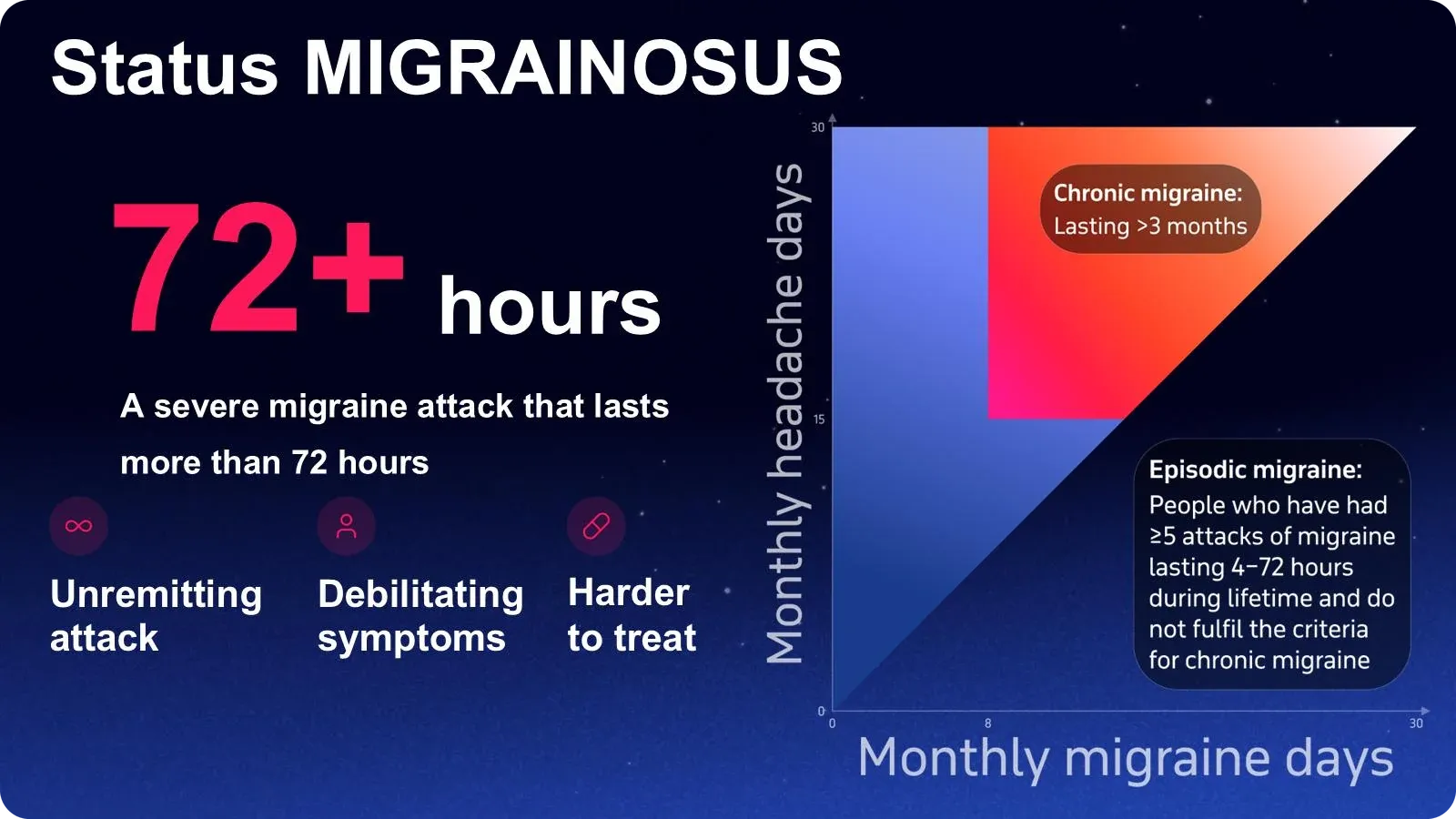
Dr. Baranova described these continuous attacks as much harder to treat: usual acute migraine medicines stop working, and taking them more often than twice a week can make things worse. An attack lasting more than 72 hours always needs a doctor. The NHS lists a migraine attack lasting longer than 72 hours among reasons to get an urgent appointment or call NHS 111 (NHS). In the US, that means calling your doctor the same day or going to urgent care, and to the emergency department if any red flag from the list below is present. Treatment of a prolonged attack should be done by a clinician; it is not something to improvise at home.
How did migraine treatment evolve? Ergot, triptans, and antibodies
Ergot: from a test to a rarely used drug
Long before modern drugs, doctors used compounds from ergot, a fungus that grows on grain. Dr. Baranova described how, for a while, a response to ergot was even treated as a diagnostic test for migraine. Ergot narrows blood vessels strongly; that is why the poisoning from ergot-contaminated grain was known in the Middle Ages as St. Anthony's fire. Today ergots are used far less often because of cardiovascular safety concerns and serious side effects (Ferrari et al., 2022), though one of them, dihydroergotamine (DHE), is still FDA-approved and prescribed in the US for some people.
How do triptans work?
Triptans were the breakthrough. The program that produced sumatriptan, the first of the triptans, was later voted by American Headache Society members the most important advance in headache medicine in 50 years (Humphrey, 2008). Triptans act on 2 related serotonin receptors, 5-HT1B and 5-HT1D (Ferrari et al., 2022):
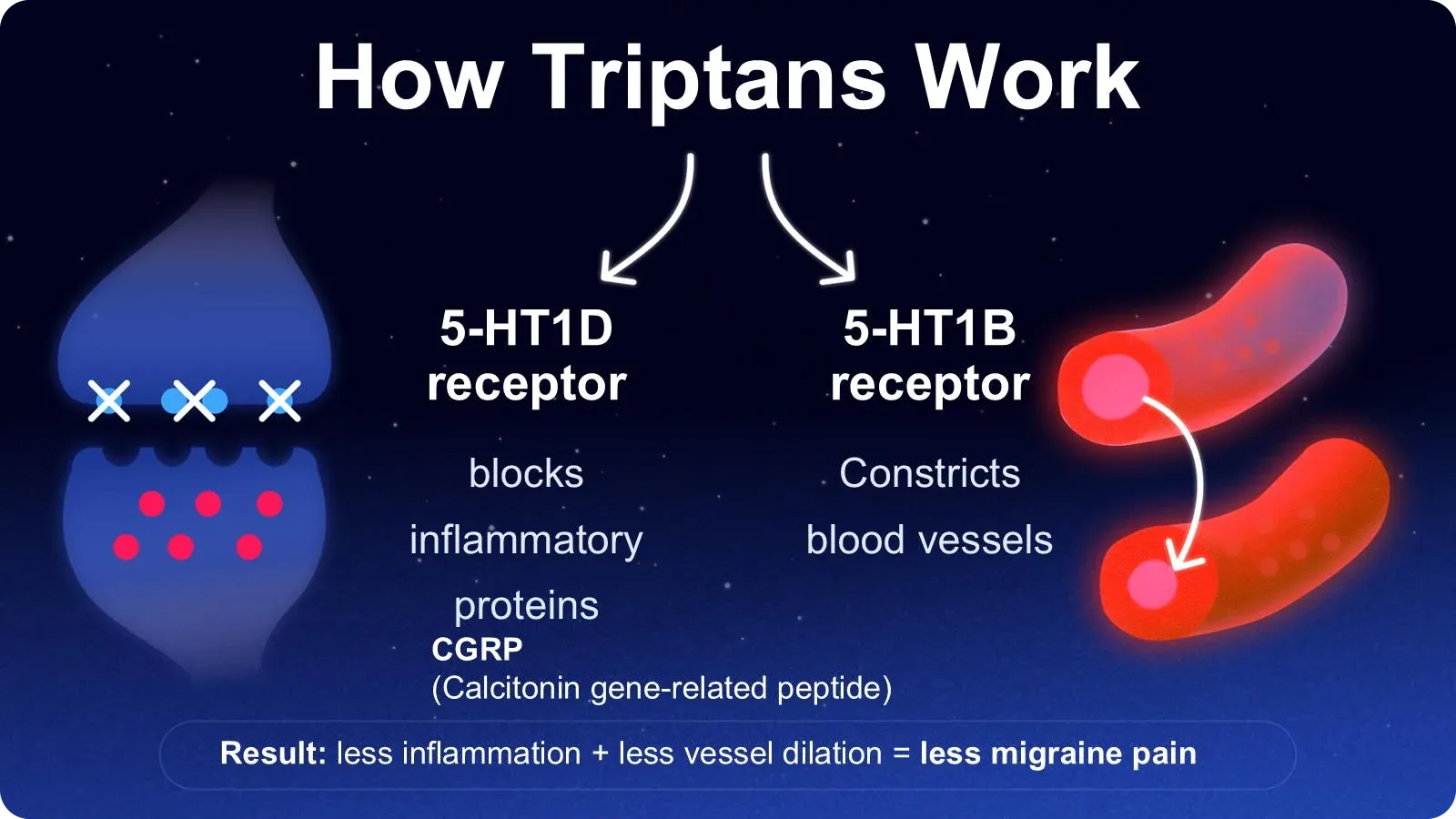
5-HT1D, on nerve endings of the trigeminal nerve, which reduces the release of calcitonin gene-related peptide (CGRP), which triggers the migraine pain. In people with migraine who respond to sumatriptan, this medication suppresses CGRP levels back to normal as the headache is relieved (Goadsby & Edvinsson, 1993).
5-HT1B, on blood vessels, which narrows dilated vessels. This was the original explanation of how triptans work, but the current view is that vessel widening is only a secondary part of migraine and, therefore, narrowing vessels is not essential for a drug to work (Ferrari et al., 2022).
The old rule of thumb was "if a triptan doesn't help, it isn't migraine". Dr. Baranova called that unreliable: a triptan can fail on a real migraine if it is taken too late, for example after delaying taking the pill due to the necessity of a long drive home, pain notwithstanding, and the better advice is not to drive during an attack at all.
What are CGRP migraine treatments?
Newer drugs target the CGRP pathway directly (Ferrari et al., 2022; Ailani et al., 2021):
Monoclonal antibodies against CGRP or its receptor, given as injections or infusions, are used for prevention. Those medications decrease the severity and/or the frequency of migraine attacks.
Gepants are small-molecule CGRP receptor blockers. Ubrogepant and rimegepant are among the newer treatments for attacks, and 2 gepants have also proven effective for prevention.
In Dr. Baranova's view, the CGRP drugs shine in prevention, while for many people triptans remain the workhorse for a single attack. Which medicine fits you depends on your attacks, your heart health, and your other conditions, and that is a decision to make with your doctor.
PACAP-38: the second pathway
PACAP-38 (pituitary adenylate cyclase-activating polypeptide) is another messenger that can also set off migraine pain. Dr. Baranova compared CGRP and PACAP-38 to a right and a left hand: for years drugs blocked only the right hand, but the left can still send a pain signal.
Drugs aimed at PACAP are still in development and not available. The results so far are mixed. An antibody against the PAC1 receptor, AMG 301, did no better than placebo for prevention (Ashina et al., 2021). An antibody against PACAP-38 itself, Lu AG09222, cut monthly migraine days by 6.2 against 4.2 on placebo in a phase 2 trial of people for whom 2 to 4 preventives had already failed (Ashina et al., 2024). Phase 2 is an early stage; larger trials still have to confirm medication efficiency. In early 2026 the developer reported positive top-line results from a larger phase 2b trial, but full data were not yet published, phase 3 had not yet started, and no PACAP drug is approved (pharmaphorum, 2026).
CGRP and PACAP: the provocation studies
In a Danish study, people with migraine without aura received a 20-minute infusion of CGRP (40 people) or PACAP-38 (32 people). Migraine-like attacks followed in 63% after CGRP and 72% after PACAP-38. Premonitory symptoms such as tiredness and yawning were reported by 9% of those with a CGRP-induced attack and by 48% after PACAP-38 (Guo et al., 2016). The authors add an important caveat: these symptoms were just as common in people who did not go on to have an attack, and the study had no placebo group. Both peptides also caused flushing, a warm sensation, palpitations, and dizziness, likely from widened blood vessels (Kuburas & Russo, 2023).
Because each messenger works through several receptors and signaling steps, each step is a possible drug target. That is why Dr. Baranova is optimistic about the next 20 to 30 years for the most efficient migraine treatment.
What sets off a migraine, and why it is not your fault
Everyone's set of triggers is different. The groups of triggers Dr. Baranova listed are the usual ones: sleep that is too short or irregular, skipped meals or fasting, overexertion including heavy exercise, dehydration, stress, weather and pressure changes, travel across time zones, strong smells and bright light, alcohol, some medicines, certain foods, and hormonal shifts. A full overview is in migraine triggers.
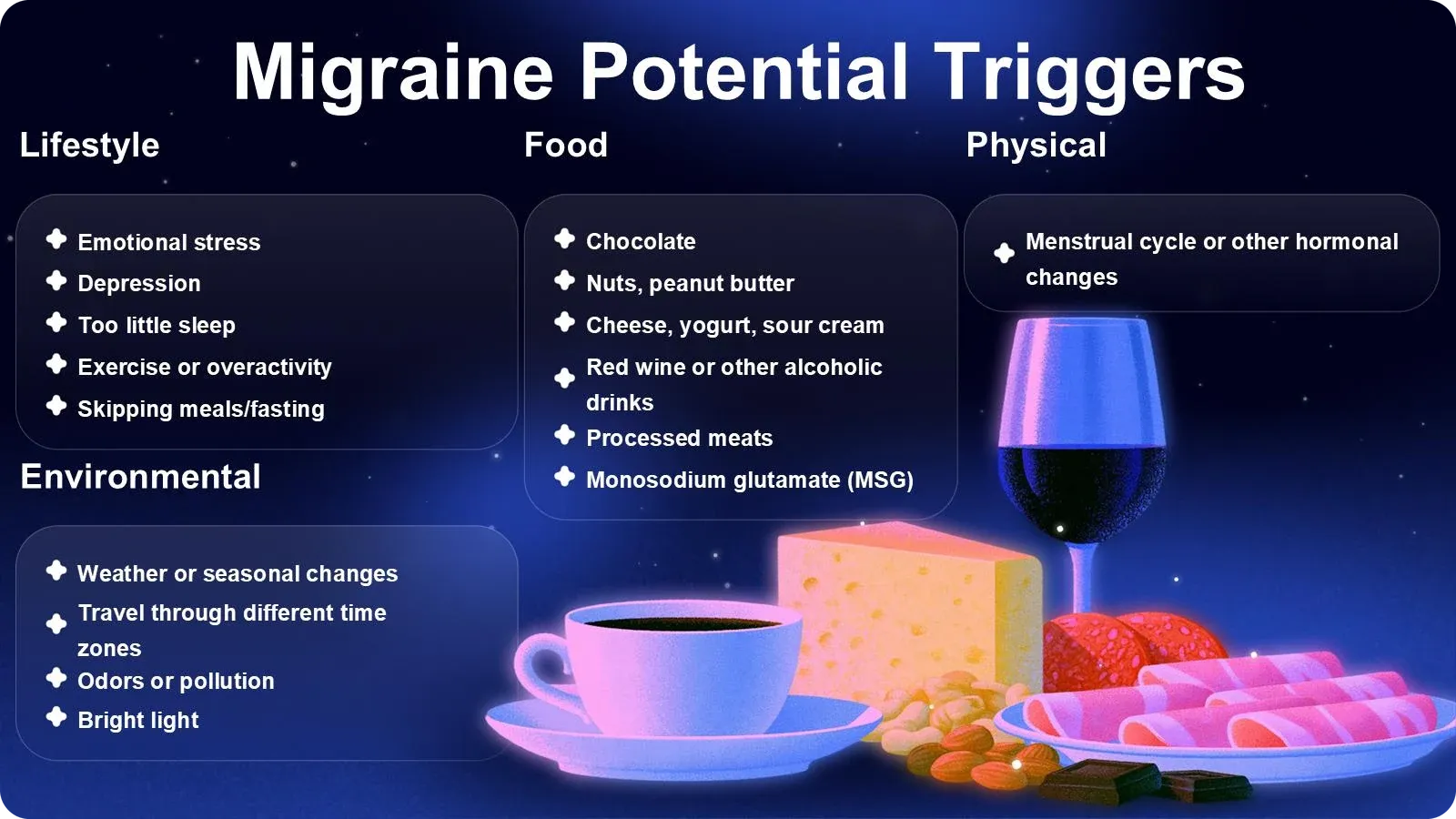
2 notes keep the list honest. First, the evidence for some food triggers is weaker than the lists suggest: a systematic review found no consistent proof that MSG eaten with food causes headache, and called for better-blinded studies (Obayashi & Nagamura, 2016). Second, some medicines really can provoke attacks. Sildenafil, the active ingredient of Viagra, induced migraine-like attacks in 10 of 15 women with migraine in an open-label (unblinded, no placebo) part of a small 2026 study; in the placebo-controlled part, in 12 men, it caused headache but not more migraine than placebo (Mohammad et al., 2026). If a new medicine coincides with more attacks, tell this to the doctor who prescribed it rather than stopping taking it on your own.
Dr. Baranova was blunt about the advice she likes least: "give up chocolate, cheese, and wine, sleep better, have no stress, stop being depressed, exercise but not too much." Telling someone to have no stress is not helpful, and the exercise advice puts people in an impossible bind. Triggers are real and worth knowing. Migraine is not a character flaw, but a reality that should be taken into account.
Genes plus triggers: the "glass" model
Is the migraine triggering mechanism proven in humans? Yes, it can be reproduced. In a placebo-controlled study, a CGRP infusion caused headache in people with migraine while placebo mostly did not (Lassen et al., 2002), and in a later study about 2/3 of volunteers developed a delayed migraine-like attack within hours (Guo et al., 2016). That is part of how we know migraine is a biological process and not imagination.
Why do some people get migraines and others don't? Partly genes. A genome-wide study of more than 102,000 people with migraine found 123 genetic regions linked to it, including the genes for CGRP and for a serotonin receptor targeted by migraine drugs (Hautakangas et al., 2022). Migraine often runs in families, but genetic testing for it is not part of routine care.
Dr. Baranova explains the role of the genes in migraine development by asking you to imagine a glass. Your genetic predisposition fills part of a glass: there are only a few genetic drops for some people, half a glass for others. Stress, short sleep, alcohol, hormonal changes, and other load top this glass up. When the glass overflows, you get an attack. Some people need only a little extra load; others need a lot. Push the load high enough, she said, and almost anyone can reach a migraine-like attack.
How does migraine become chronic?
Chronic migraine implies having a strong headache on 15 or more days a month for more than 3 months. A review by Arne May and Laura Schulte in Nature Reviews Neurology describes it as a threshold problem: predisposing factors combined with frequent headache pain lower the threshold for new attacks (May & Schulte, 2016). The most important risk factors you can change are overuse of acute migraine medicine, ineffective or late application of an acute treatment, obesity, depression, and stressful life events; age, female sex, and lower education also raise the risk. Chronic migraine affects 1 to 2% of people and develops from episodic migraine at a rate of about 3% a year. The good news is that chronic migraine is reversible: about 26% of these cases go into remission within 2 years.
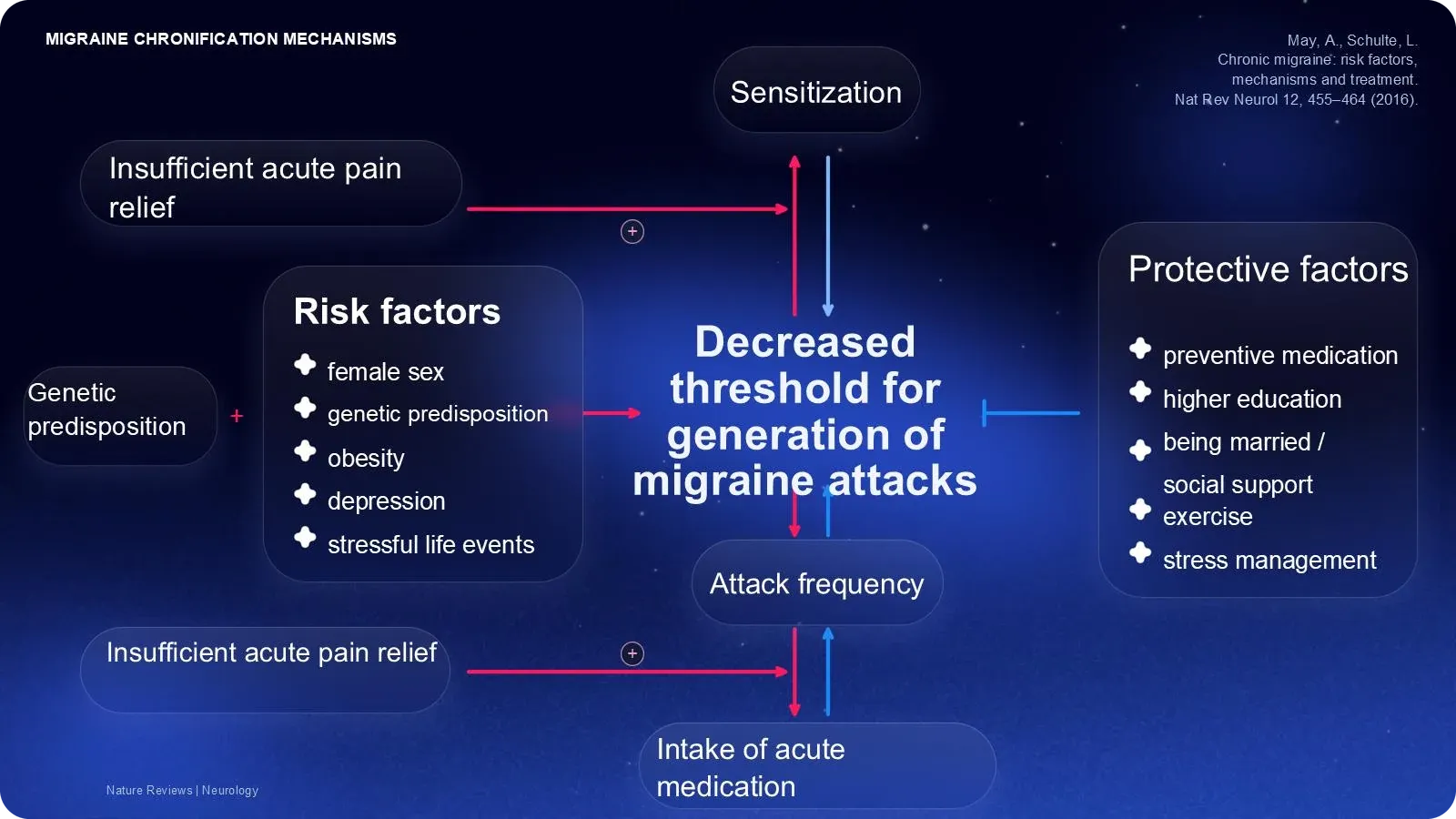
That is the practical reason for Dr. Baranova's "don't suffer through it": effective early treatment and a preventive plan, if your doctor thinks you need one, are part of keeping the glass from overflowing more often.
What happens in the body during a migraine?
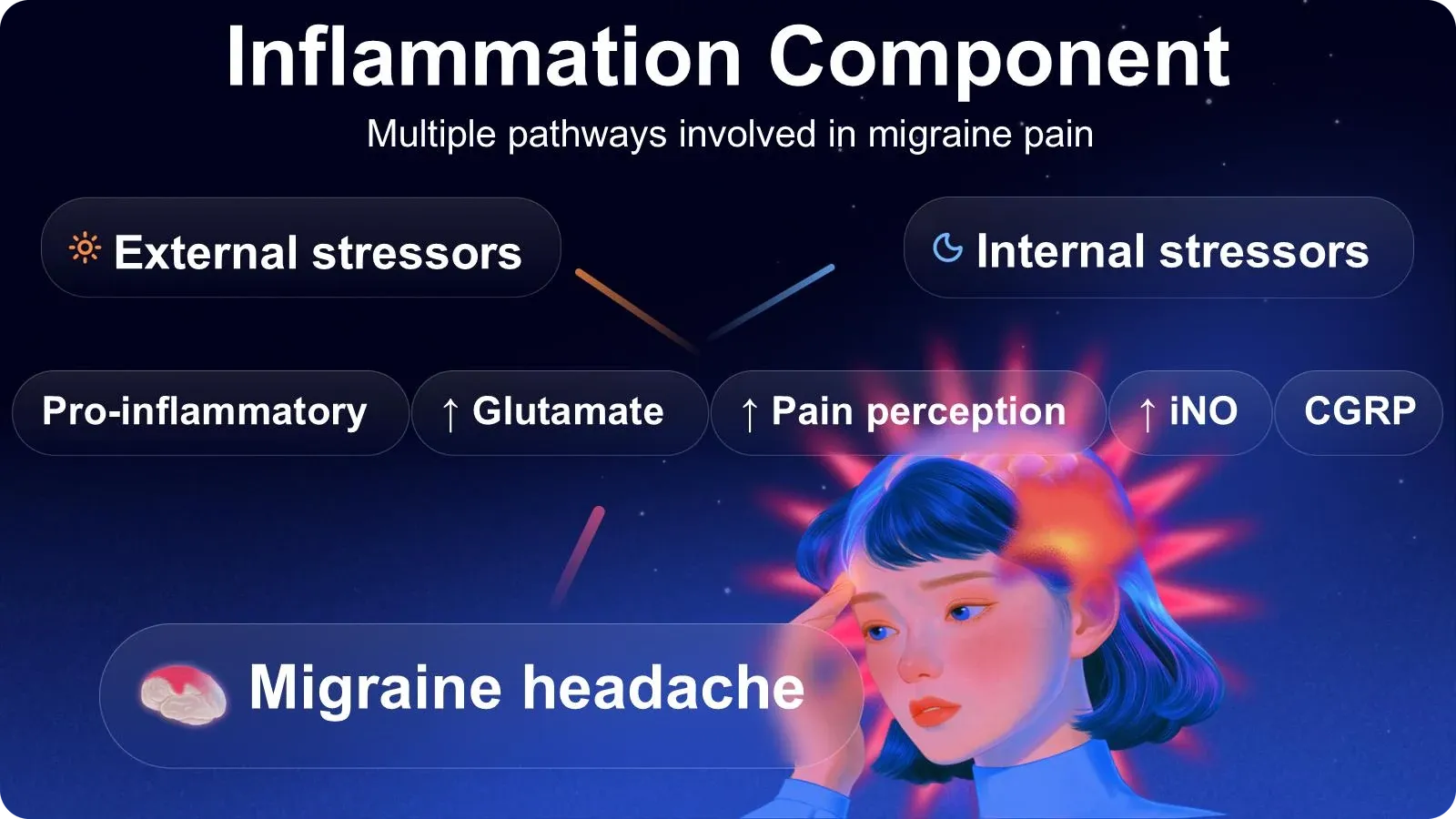
Dr. Baranova described 4 components of a body response: Cortical Spreading Component, Energy Exhaustion Component, Inflammatory Component, and Pain Component.
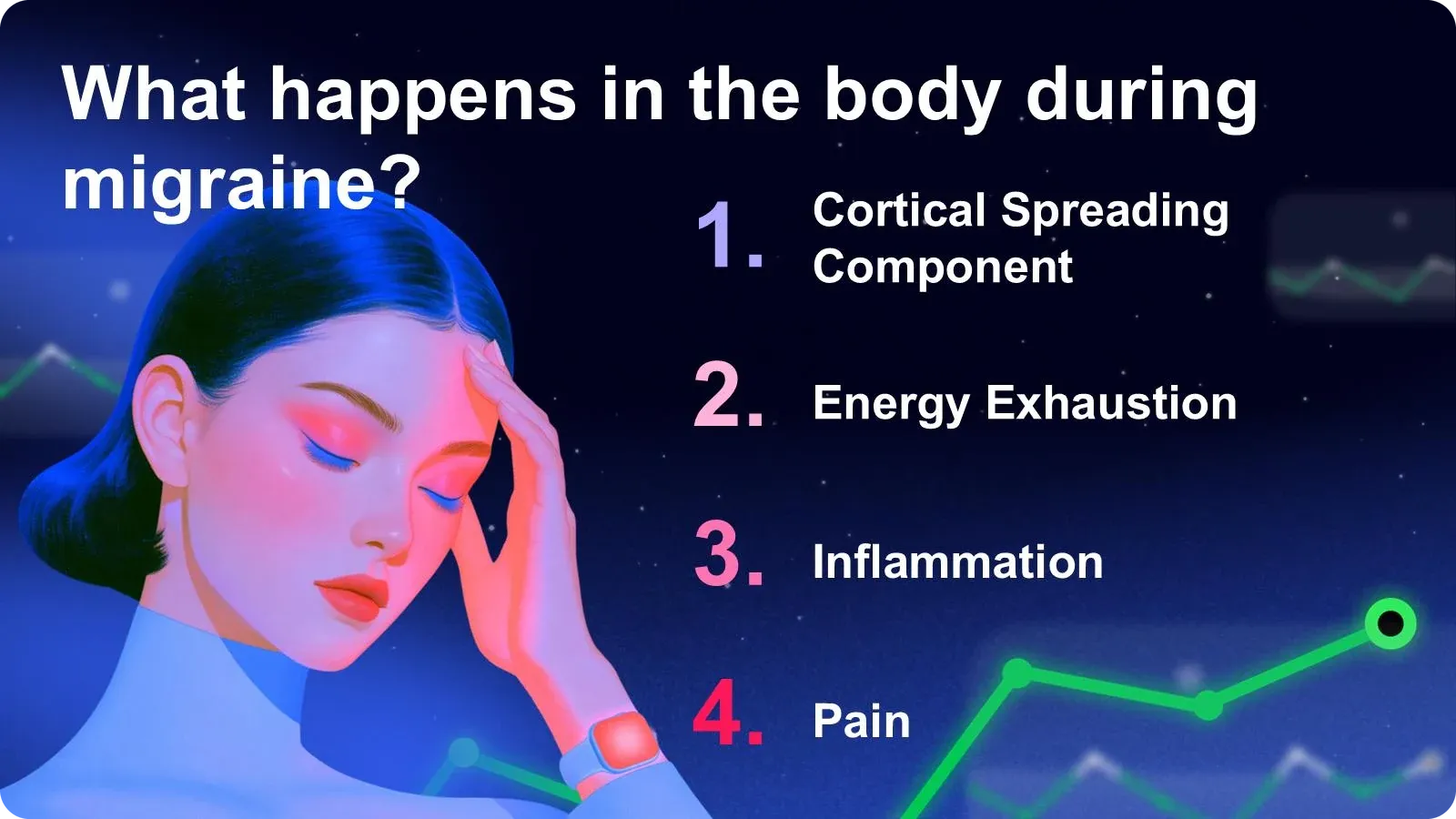
A wave across the cortex
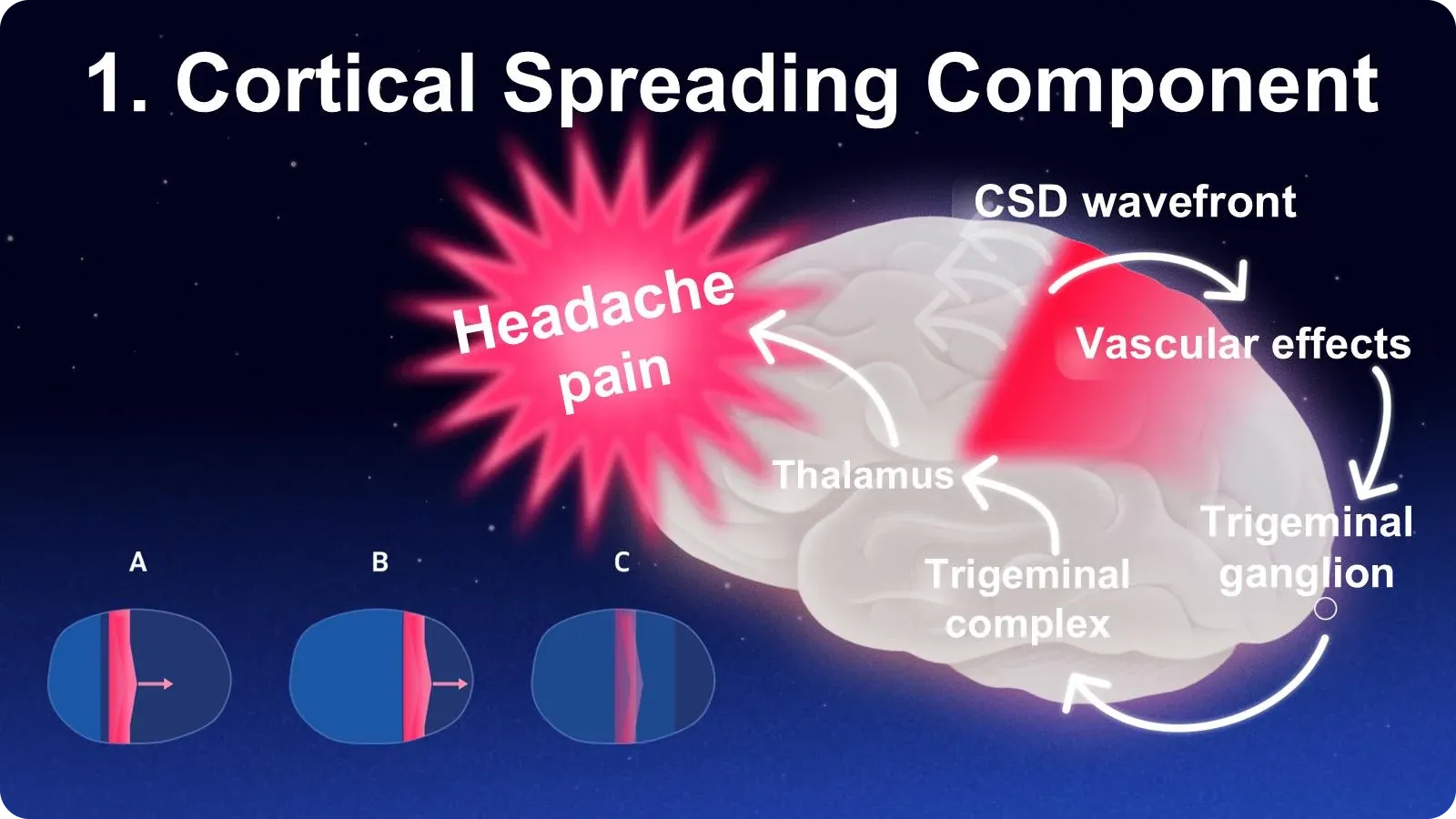
Cortical spreading depression is a slow wave of calcium-dependent electrical signal that travels across the brain's surface, followed by a temporary quieting of brain activity. It probably causes aura, and may help to turn on the trigeminal pain system, though how it starts exactly and how it causes symptoms are still debated (Charles & Baca, 2013; Ferrari et al., 2022). You do not feel the wave itself, but it is certainly there.
The energy "brownout"
This was the part most relevant to energy-limiting conditions, and Dr. Baranova said about half of the questions sent in before the webinar were about it. A brownout is not a blackout: the power is still on, but there is not enough of it to go around. There are 3 steps in brownout development: a hyperexcitable brain demands more energy and oxygen; this demand outruns the supply of ATP, the cell's energy currency; various neuron-supporting cells send inflammatory signals, and pain pathways get initiated.
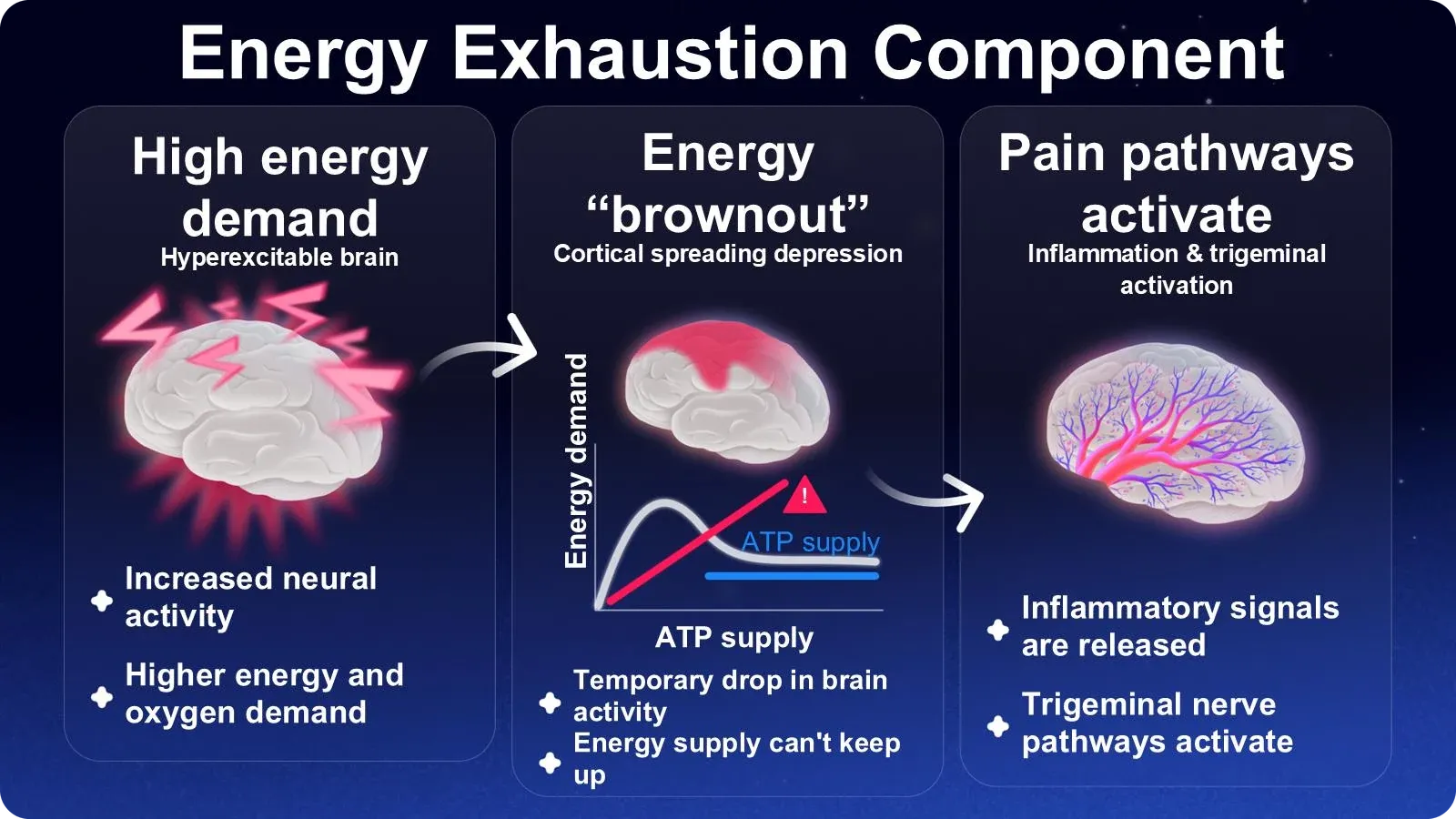
Here is one research group that shares Dr. Baranova’s vision of migraines. Gross and colleagues describe migraine as a response to cerebral energy deficiency or oxidative stress that exceeds the brain's capacity, with evidence of abnormal energy metabolism and mitochondrial function (Gross et al., 2019). We stress that this is a leading hypothesis, not a settled fact, and it does not mean you caused your attack by doing too much. It does, however, explain why an energy-depleted day is also a higher-risk day for migraine.
Inflammation and chemical messengers
Several messenger molecules add to the migraine load. CGRP is the best known migraine mediator. Nitric oxide pathways are another: that is how sildenafil may provoke an attack. Glutamate is a normal signaling molecule; Dr. Baranova explained why large amounts of this messenger might overload sensory systems. This, however, may happen in some people, but not others. As noted above, the human evidence on foodborne MSG as a trigger for migraines is inconsistent. All of those molecules lead to a release of another set of messengers, called cytokines, which cause inflammation directly. This inflammatory side is one reason simple painkillers/anti-inflammatory drugs help some people, especially in case of milder attacks (Ferrari et al., 2022).
Pain, and sometimes no pain at all
Pain is the most familiar component of migraine, but it is not always there. "How can I have every migraine symptom but no headache?" was one of the most common questions before the webinar. Yes, it is possible, and it has a name (see the chapter on Silent Migraine below).
What is a silent migraine (migraine without headache)?
"Silent migraine" is the everyday name for migraine aura without the headache. ICHD-3 calls it typical aura without headache: aura symptoms with no headache during or within 60 minutes after them (ICHD-3). Symptoms can include:
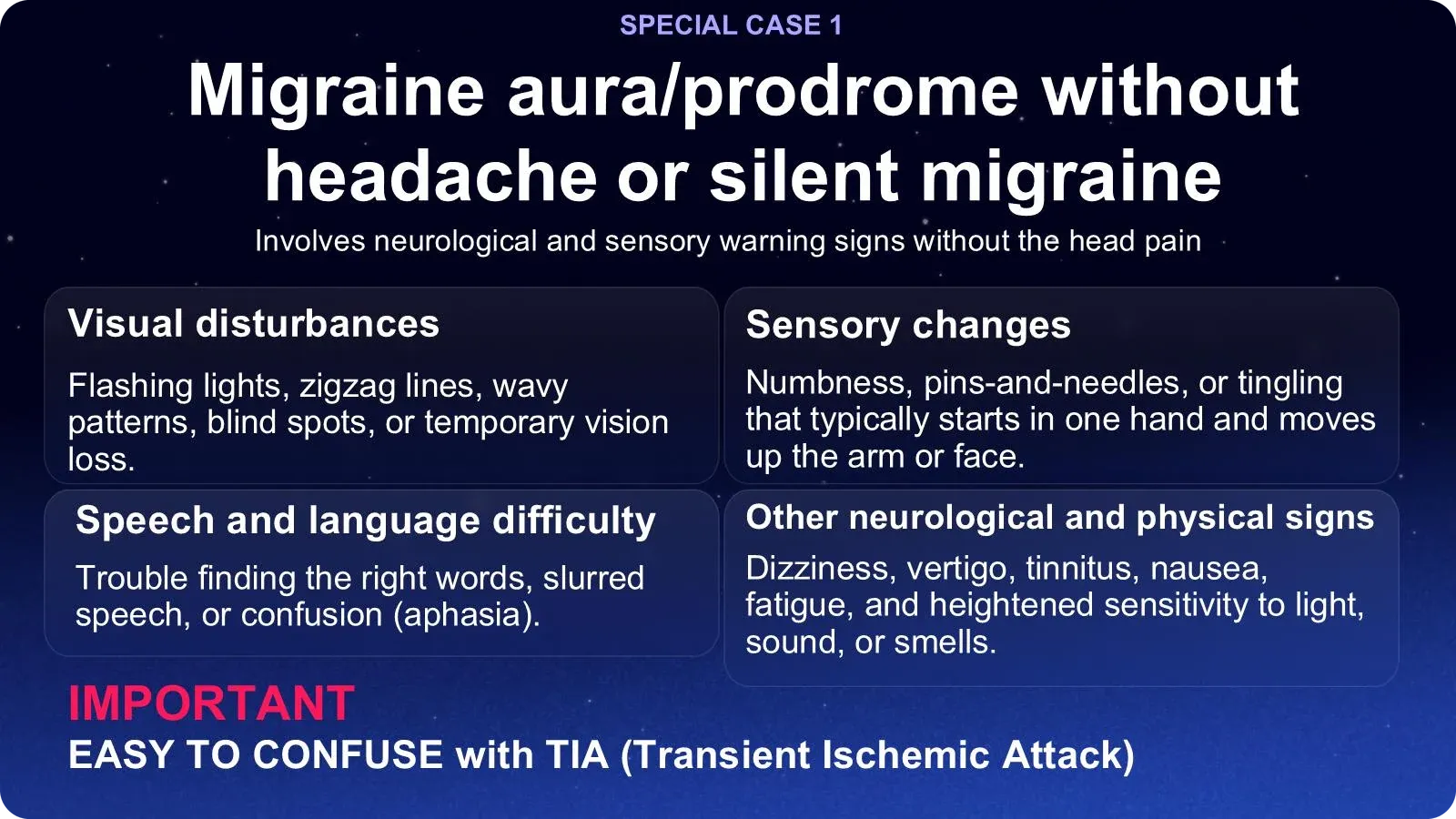
Visual changes: flashing lights, zigzag lines, blind spots.
Sensory changes: pins and needles or numbness, often starting in one hand and moving up the arm or to the face.
Speech changes: trouble finding the right words.
Why it needs a doctor: these symptoms can look like a transient ischemic attack (TIA), a temporary interruption of blood flow to part of the brain that is a warning sign for stroke. ICHD-3 says that without a typical migraine headache, telling aura apart from the signal of a very serious health condition, such as TIA, is hard and often needs investigation. At the very least, TIA should be ruled out when aura appears for the first time after age 40, when symptoms are only "negative" (such as losing part of your vision), or when the aura is unusually long or very short. If you have these symptoms without pain for the first time, treat it as urgent, not as a migraine variant to wait out. Stroke and TIA can happen in younger people too; see stroke in young adults.
Hormones and migraine
Menstrual migraine
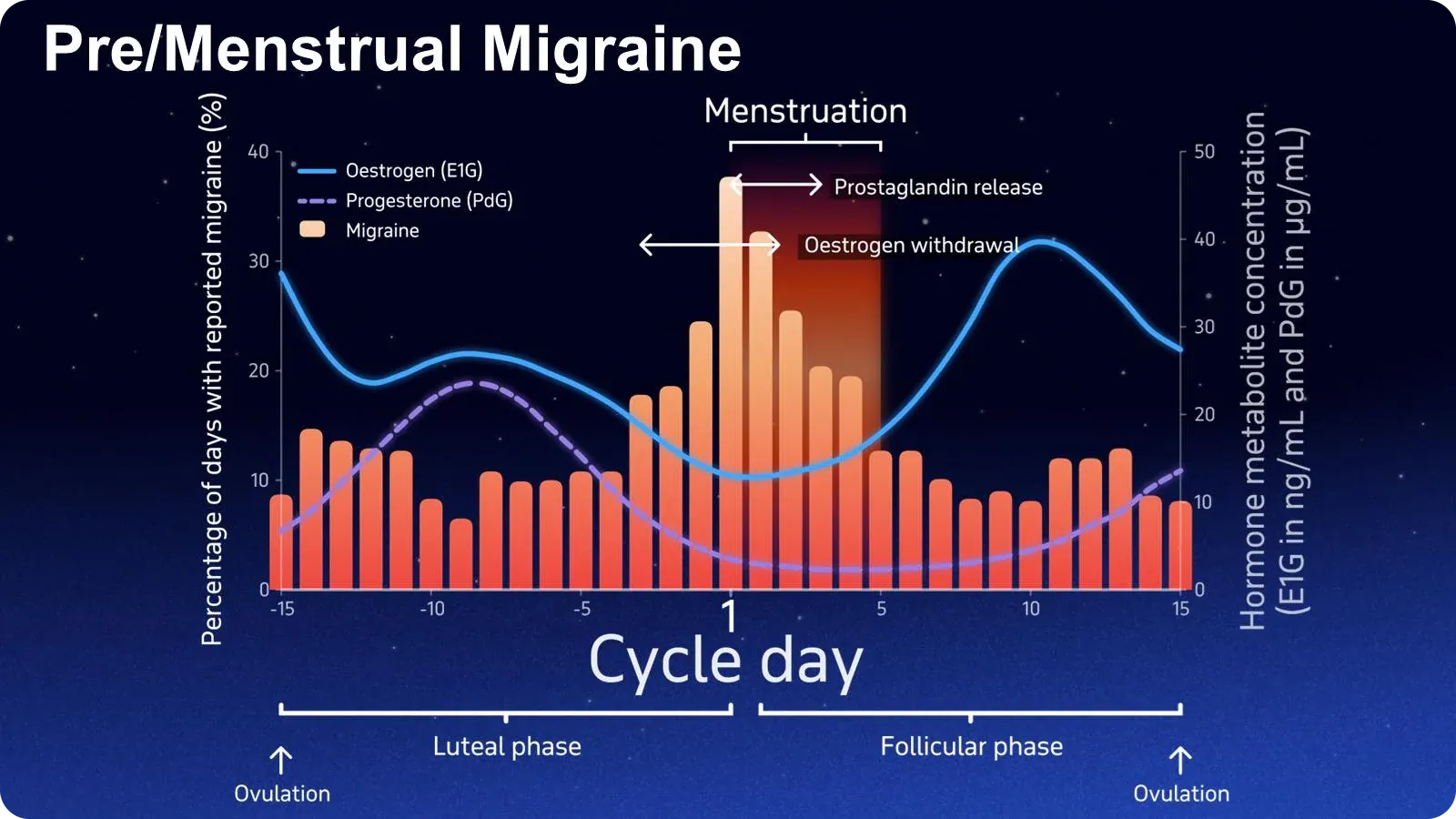
Many women get migraine attacks within a certain window that spans from 2 days before to 3 days after the first day of their period. The leading explanation for this phenomenon is the period-associated fall in estrogen levels. In a study of women followed through their cycles, those with migraine had a faster drop in estrogen after its late-cycle peak than women without migraine, even though their peak levels were similar (Pavlović et al., 2016). Dr. Baranova suggested talking about your migraine patterns with your OB-GYN; whether any hormonal approach would be appropriate depends on your overall health. More in menstrual migraine.
Pregnancy and perimenopause
In terms of estrogen levels, pregnancy and menopause follow opposite patterns. In a prospective study of 47 pregnant women previously diagnosed with migraine without aura, their migraine patterns improved in 47% in the first trimester, 83% in the second, and 87% in the third; within a month of giving birth, migraines came back in 55% of these women (Sances et al., 2003). Around perimenopause, when estrogen levels fluctuate and fall, Dr. Baranova said some women may get their migraines for the first time. Even so, any new headache after 50 needs a doctor's assessment first.
Why the estrogen drop may hurt
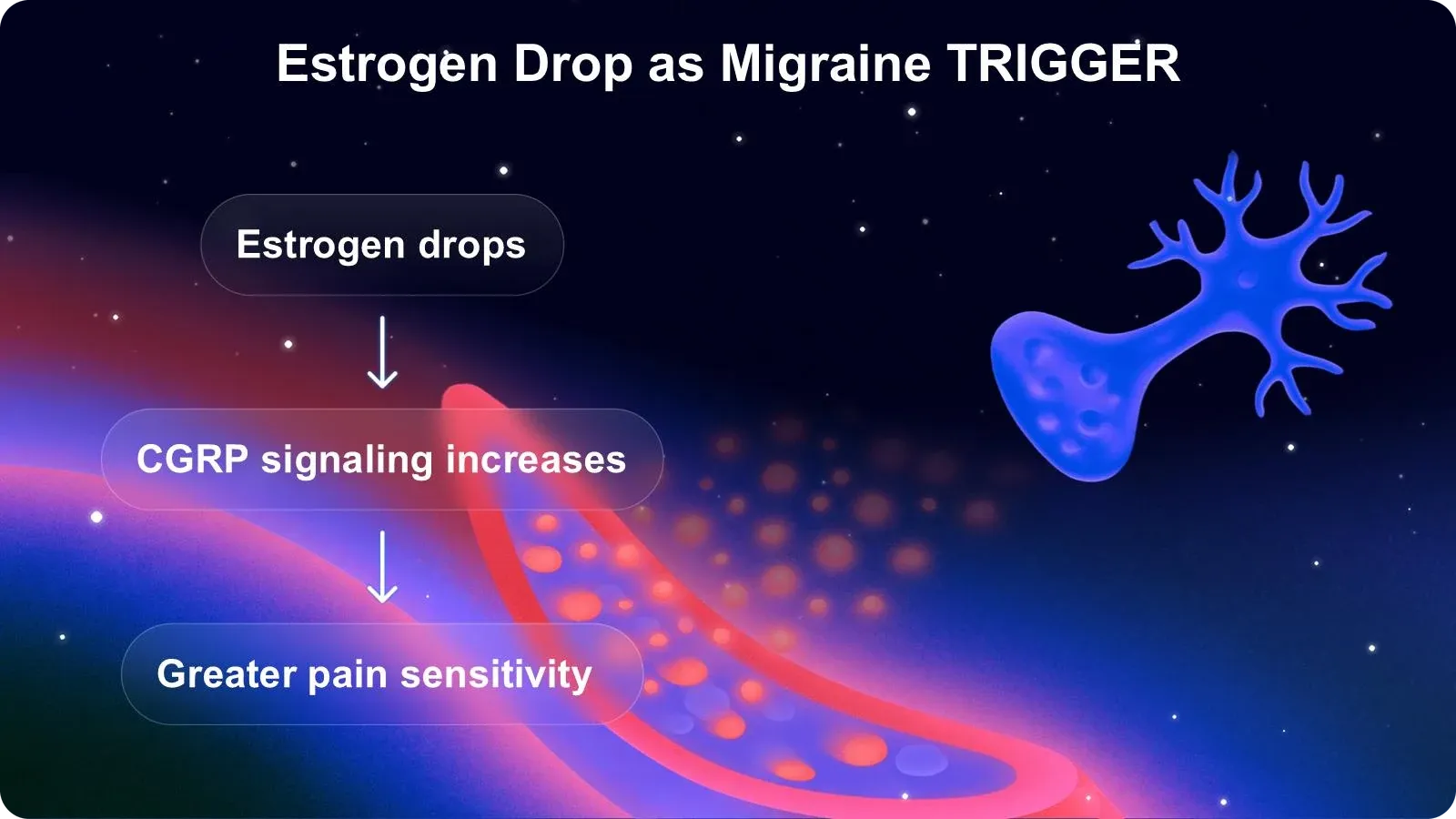
Dr. Baranova described estrogen as a brake on the CGRP pain circuit: when estrogen drops, the brake comes off and less CGRP is needed to trigger pain. Research supports this general direction: fluctuations of ovarian hormones, mainly in the levels of estrogen, do influence the levels of CGRP in the trigeminal nerve system, which may help explain why migraine is 2 to 3 times more common in women (Labastida-Ramírez et al., 2019). The connections between the levels of estrogen and the migraines in humans are still being worked out.
Long COVID headaches, ME/CFS and migraine and fatigue
Headache is among the most frequent symptoms that increase their magnitude or start anew after COVID-19. A review in The Journal of Headache and Pain describes long COVID headache either as a worsening of a pattern of headache you already had, or as a new type of headache that starts during the infection or later. These patterns may look like migraine, but more often they look like tension-type headache. There are almost no treatment trials, so doctors treat post-COVID headaches by the guidelines for the general type of a headache it resembles (Tana et al., 2022).
In ME/CFS, the overlap with migraine is striking, but the studies are small. In one, 84% of 67 people with chronic fatigue syndrome had migraine, compared with 5% of 21 healthy controls (Ravindran et al., 2011). Dr. Baranova's framing was that an energy-limiting condition behaves like a systemic illness, which is why a "new migraine" in someone with ELC might not be a migraine at all but a new symptom of the main condition. That question is worth raising with your doctor rather than acting on any assumption.
What Welltory's community data suggests
This is a Welltory community observation shared in the webinar, not a clinical study. It shows an association, not a cause.
In the webinar we shared 2 numbers that reflect the pattern of migraines in Welltory's community. Almost 1 in 3 women in our community named migraine as one of their health concerns. Among women who wear a watch and had marked at least 3 crashes, head pain was more common around crashes than on any ordinary day. On ordinary days, head pain appeared on about 13% of logged days; around crashes it was about 5 percentage points higher 4–7 days before a crash, 8 points higher 1–3 days before, 15 points higher on the day the crash started, 6 points higher 1–3 days after, and 10 points higher 4–7 days after.
How to read it: head pain here is self-reported in the app, not a diagnosis of migraine; crashes are the days women marked themselves; people who closely track attacks of a headache are not a random sample. What it suggests is that head pain does not simply coincide with a crash; it tends to manifest itself throughout the whole crash period. If that pattern matches your experience, the PEM warning signs listed in PEM crash warning signs are worth knowing.
Book your place before the Lab opens on December 1
Welltory Migraine Lab is a paid, moderated online community for women 18 to 65 living with migraine. Opens December 1, 2026. Peer support and education, not medical care.
Pacing: one strategy Dr. Baranova suggests for migraine and crashes
If migraine and crashes share an energy side, Dr. Baranova argued, it makes sense to manage them with the same tool: pacing.
Treat your energy stores as a bank account with brutal overdraft fees. Overspend on a good day, and then you have to pay it back with interest.
The bill comes later. The cost of a big day often shows up a day or days later, which is why the real cause for a bout of migraine is so hard to identify.
Stay inside your limit. Keep activity within your own spending limits so good days don't cost you the next ones.
Energy management is part of the NICE guideline for ME/CFS (NICE NG206). For migraine, pacing has not been tested as a treatment in trials; Dr. Baranova presents it as a reasonable way to keep your loads below your own migraine threshold, alongside the treatment your doctor recommends, not instead of it. A practical guide for implementing this strategy is in long COVID pacing.
Living with migraine and an energy-limiting condition: the questions people ask next
Can long COVID cause migraine?
Long COVID can come with a new headache or make an existing one worse, and some of these headaches have migraine features. Whether a new headache after COVID is migraine, a headache caused by the infection's after-effects, or something else is a doctor's call, made with the ICHD-3 criteria and red flags. If your headaches started or changed after COVID, say so explicitly at the appointment.
Is it safe to exercise if I have migraine and post-exertional malaise?
General migraine advice often includes regular exercise, but with post-exertional malaise (PEM) an exercise can trigger a crash. Do not push through a fixed program. Start well below your limit, watch how you feel over the next 1 to 3 days, and ask your clinician how to adapt any exercise plan to PEM.
Which doctor should I see?
Start with your primary care doctor, who can confirm the headache type and start treatment. If attacks are frequent, disabling, or not responding, ask for the advice of a neurologist or headache specialist. For headaches related to hormonal patterns, involve your OB-GYN. If you also have ME/CFS or long COVID, it helps when one clinician holds the whole picture.
Will taking pain medicine often make it worse?
It can. Using acute medicine on too many days a month may lead to medication-overuse headache. This type of overuse is one of the main modifiable risk factors for chronic migraine. Count your medicine days each month and ask your doctor about a preventive strategy if the number keeps rising.
Could my migraine be something more serious?
A migraine that follows the pattern which is typical for you is very unlikely to be dangerous. What changes the picture is anything new: sudden onset, an attack lasting longer than usual, fever, or neurological symptoms. The red flags are listed in the next section.
Is a "migraine hangover" the same as a crash?
They can feel alike, and Dr. Baranova pointed out how much the postdrome resembles a day with an energy-limiting condition. A postdrome usually settles within 24 hours of the pain ending; a PEM crash often lasts longer and follows exertion. Logging both types of events separately would help you and your doctor to tell them apart.
Before you blame yourself
Migraine and crashes both invite self-blame: I ate the wrong thing, I should have rested, I'm not coping. The research points the other way. Genes set your threshold, and some "triggers" turn out to be early symptoms of an attack already under way. Hormonal fluctuations shift the threshold day to day, and an energy-depleted brain is closer to its limits. None of that is a character flaw.
What you can change is how much you know about your own patterns. Before you blame yourself, check what your body was telling you. Look at how you slept, how much muscle work you did, and what your load was in the days before the attack, rather than chalking the headache up to what you had eaten an hour before. Change one thing at a time, and look at the data trend over 1 to 2 weeks.
When to see a doctor
Call 911 or go to the emergency department if you have (NHS; Do et al., 2019):
a sudden, extremely painful headache that peaks within a minute of its onset;
weakness on one side of the body or face, trouble speaking, confusion or drowsiness, vision loss or double vision, or a seizure;
a headache with fever, a stiff neck or a rash, or pain that arises after a head injury;
aura-like symptoms (numbness, vision or speech changes) for the first time, without a headache;
a severe headache that won't go away, gets worse, or is the worst of your life while pregnant or in the year after giving birth (CDC Hear Her).
Get an urgent same-day appointment if you have:
a migraine attack that has lasted more than 72 hours;
aura symptoms that last more than an hour;
a new headache and a weakened immune system or a history of cancer;
a headache that is set off by coughing, straining, sex, or exertion, or changes sharply when you stand up or lie down;
a new kind of headache, especially after age 50, or if your usual pattern of migraine attacks suddenly changes.
Book a regular appointment if attacks are becoming more frequent, if you noticed using acute medicine on many days a month, or you have never had a formal migraine diagnosis.
How to bring this up with your doctor
Bring a one-page typed record of your last few attacks: when each started, how long it lasted, what the pain was like, any signs of aura, what you took, and whether it helped. Add your monthly headache days, medicine days, and days you could not function. If you live with ME/CFS or long COVID, say whether attacks follow exertion or crashes. One sentence that opens the right conversation: "My headaches meet the migraine pattern, and I also have an energy-limiting condition. Can we treat the migraine on its own terms, not only as part of the other illness?"
How Welltory helps — and what it cannot do
The limits first. Welltory is a general wellness product, not a medical device. It does not diagnose, predict, prevent, or treat migraine, crashes, or any energy-limiting condition, and it cannot tell you whether a headache is a migraine.
What it can do is keep the record:
Migraine Tracker (iOS). On the Today screen you can log the day a migraine started, start and end times, severity, where it hurt, symptoms, what medication you took, and whether it helped, plus a note. Logging is free; a subscription adds charts comparing your pattern of stress, active time, and sleep to your own 30-day baseline. A shifted day is not a migraine prediction or proof of a cause. Migraine Tracker is currently offered in English to new iOS users who reported migraine during onboarding (Help Center).
Crash Tracker (iOS). If you reported a condition associated with PEM, such as ME/CFS, long COVID, or POTS, you may see Crash Tracker instead, which logs crashes, what came before the crash, and what helped (Help Center).
Tags and My Patterns. When the Today screen detects a stress or rest episode and asks "What happened?", your answers are saved as tags. Over time, My Patterns shows which tagged situations come up most around the time of stress and the recovery periods (Help Center).
A record for your doctor. Your Journal keeps your entries, so you can collect the dates, the durations, and what has helped and bring this record to an appointment instead of painstakingly reconstructing your patterns from memory.
Where you can work this out with other women. Welltory Care is a paid service with 2 programs. Each includes a personal pacing strategy built on your own data, a community with similar symptoms, and a medical board that explains what is happening to your body (Help Center). Both programs are designed for women aged 18 to 65; no confirmed diagnosis is needed for joining.
Migraine Lab is for women living with migraine. This community opens on December 1, 2026; you can book your entrance now and your paid period starts on the opening day. On November 2, 2026, the Migraine Lab page listed 3 plans: $99 a month, $219 every 3 months, or $540 a year; see the page for current prices. Join Migraine Lab or go straight to the Migraine Lab plans; read what Migraine Lab is, who it is for, and what it costs.
Energy Lab is for women living with ME/CFS, long COVID, fibromyalgia, POTS, MCAS, and similar energy-limiting conditions, and it is open now. Join Energy Lab or go straight to the Energy Lab plans; read what Energy Lab is, who it is for, and what it costs.
If you live with both of these conditions, migraines and ELC, start with the one that weighs on you most right now; one purchase would cover one program. Involvement in our community will provide you with education and peer support, not medical care, and it does not replace your clinician. Membership renews automatically; you can cancel online at any time, and your first purchase has a 14-day money-back guarantee.
How we made it
This article is based on Welltory's webinar with Dr. Ancha Baranova (October 28, 2026). We checked every medical number and statement from the talk against a published source: the ICHD-3 classification for criteria, status migrainosus, and aura without headache; the NHS migraine page and the SNNOOP10 red-flag review for urgent signs and medicine timing; the Ferrari et al. 2022 Nature Reviews Disease Primers overview and the American Headache Society 2021 consensus statement for treatments; Guo et al. 2016 for the CGRP and PACAP-38 provocation figures; May & Schulte 2016 for chronic migraine; and the phase 2 trials of PACAP antibodies. Where a statement was Dr. Baranova's opinion or metaphor, we say so. A few claims from the talk were dropped or reworded because we could not confirm them in a primary source. Welltory community numbers come from Welltory's own app data, were not checked against an outside source, and are labeled as community observations. For the product section, we checked every function against the Welltory Help Center on November 2, 2026.
Made with AI tools, then edited and fact-checked by the Welltory team. See our Editorial & AI policy.
Jane Smorodnikova, co-founder of Welltory, built the methodology behind how we read physiological data.
Written by Mariia Podobed, Prof. Ancha Baranova, and Irina Motovilova. Prof. Baranova is a medical advisor to Welltory's Energy Lab and Migraine Lab communities.
This article is for educational purposes only and is not medical advice. It summarises a webinar; opinions are attributed to the speaker, and medical statements were checked against the sources listed. A sudden severe headache, neurological symptoms, a headache with fever, an attack lasting more than 72 hours, or aura-like symptoms without headache for the first time need prompt medical assessment. Medicines are named by class or as examples only: which treatment suits you is your doctor's decision. Disclosure: Dr. Baranova is a medical advisor to Welltory's Energy Lab and Migraine Lab communities. Welltory community figures are observations from self-reported app data, not a clinical study, and show association, not cause. Welltory is a general wellness product, holds no regulatory clearance and does not diagnose, predict or treat migraine or any energy-limiting condition.
Was this helpful?
Ask AI for a summary of page


Written by Mariia Podobed

Carefully explores the lived experience of chronic conditions, transforming it into clear, accessible content that helps people find understanding, support, and answers.
Written by Prof. Ancha Baranova

Professor at the School of Systems Biology, George Mason University (Ph.D., D.Sc.), and medical advisor to Welltory's Energy Lab and Migraine Lab communities. A geneticist and systems biologist, she studies functional genomics, metabolism, chronic diseases and aging, and is a widely recognized science communicator.
Written by Irina Motovilova

Welltory’s brand and community lead. A hyperpolyglot specializing in UX writing and content strategy, she builds global communities and creates content people actually want to read.
Written by Jane Smorodnikova

The founder and CEO of Welltory. A recognized tech leader with two Master's degrees and experience at MIT, she has scaled Welltory to over 17 million users.
References
- Headache Classification Committee of the International Headache Society. The International Classification of Headache Disorders, 3rd edition. Cephalalgia 2018;38(1):1–211. https://doi.org/10.1177/0333102417738202 (online: https://ichd-3.org/)
- GBD 2016 Headache Collaborators. Global, regional, and national burden of migraine and tension-type headache, 1990–2016. The Lancet Neurology 2018;17(11):954–976. https://doi.org/10.1016/S1474-4422(18)30322-3
- Ravindran MK, Zheng Y, Timbol C, Merck SJ, Baraniuk JN. Migraine headaches in chronic fatigue syndrome (CFS): comparison of two prospective cross-sectional studies. BMC Neurology 2011;11:30. https://doi.org/10.1186/1471-2377-11-30
- Gross EC, Lisicki M, Fischer D, Sándor PS, Schoenen J. The metabolic face of migraine — from pathophysiology to treatment. Nature Reviews Neurology 2019;15:627–643. https://doi.org/10.1038/s41582-019-0255-4
- Ferrari MD, Goadsby PJ, Burstein R, et al. Migraine. Nature Reviews Disease Primers 2022;8:2. https://doi.org/10.1038/s41572-021-00328-4
- Giffin NJ, Lipton RB, Silberstein SD, Olesen J, Goadsby PJ. The migraine postdrome: an electronic diary study. Neurology 2016;87(3):309–313. https://doi.org/10.1212/WNL.0000000000002789
- NHS. Migraine. https://www.nhs.uk/conditions/migraine/
- Do TP, Remmers A, Schytz HW, et al. Red and orange flags for secondary headaches in clinical practice: SNNOOP10 list. Neurology 2019;92(3):134–144. https://doi.org/10.1212/WNL.0000000000006697
- Humphrey PPA. The discovery and development of the triptans, a major therapeutic breakthrough. Headache 2008;48(5):685–687. https://doi.org/10.1111/j.1526-4610.2008.01097.x
- Goadsby PJ, Edvinsson L. The trigeminovascular system and migraine: studies characterizing cerebrovascular and neuropeptide changes seen in humans and cats. Annals of Neurology 1993;33(1):48–56. https://doi.org/10.1002/ana.410330109
- Ailani J, Burch RC, Robbins MS; Board of Directors of the American Headache Society. The American Headache Society Consensus Statement: update on integrating new migraine treatments into clinical practice. Headache 2021;61(7):1021–1039. https://doi.org/10.1111/head.14153
- Ashina M, Doležil D, Bonner JH, et al. A phase 2, randomized, double-blind, placebo-controlled trial of AMG 301, a PAC1 receptor monoclonal antibody for migraine prevention. Cephalalgia 2021;41(1):33–44. https://doi.org/10.1177/0333102420970889
- Ashina M, Phul R, Khodaie M, Löf E, Florea I. A monoclonal antibody to PACAP for migraine prevention. New England Journal of Medicine 2024;391(9):800–809. https://doi.org/10.1056/NEJMoa2314577
- Obayashi Y, Nagamura Y. Does monosodium glutamate really cause headache? A systematic review of human studies. The Journal of Headache and Pain 2016;17:54. https://doi.org/10.1186/s10194-016-0639-4
- Mohammad A, Iversen DB, Rausgaard NLK, et al. Sildenafil provokes headache but not migraine in men with migraine without aura: a randomized, placebo-controlled crossover trial. The Journal of Headache and Pain 2026;27:16. https://doi.org/10.1186/s10194-025-02262-2
- Hautakangas H, Winsvold BS, Ruotsalainen SE, et al. Genome-wide analysis of 102,084 migraine cases identifies 123 risk loci and subtype-specific risk alleles. Nature Genetics 2022;54:152–160. https://doi.org/10.1038/s41588-021-00990-0
- Lassen LH, Haderslev PA, Jacobsen VB, et al. CGRP may play a causative role in migraine. Cephalalgia 2002;22(1):54–61. https://doi.org/10.1046/j.1468-2982.2002.00310.x
- May A, Schulte LH. Chronic migraine: risk factors, mechanisms and treatment. Nature Reviews Neurology 2016;12(8):455–464. https://doi.org/10.1038/nrneurol.2016.93
- Charles AC, Baca SM. Cortical spreading depression and migraine. Nature Reviews Neurology 2013;9(11):637–644. https://doi.org/10.1038/nrneurol.2013.192
- Guo S, Vollesen ALH, Olesen J, Ashina M. Premonitory and nonheadache symptoms induced by CGRP and PACAP38 in patients with migraine. Pain 2016;157(12):2773–2781. https://doi.org/10.1097/j.pain.0000000000000702
- Kuburas A, Russo AF. Shared and independent roles of CGRP and PACAP in migraine pathophysiology. The Journal of Headache and Pain 2023;24:34. https://doi.org/10.1186/s10194-023-01569-2
- Pavlović JM, Allshouse AA, Santoro NF, et al. Sex hormones in women with and without migraine: evidence of migraine-specific hormone profiles. Neurology 2016;87(1):49–56. https://doi.org/10.1212/WNL.0000000000002798
- Sances G, Granella F, Nappi RE, et al. Course of migraine during pregnancy and postpartum: a prospective study. Cephalalgia 2003;23(3):197–205. https://doi.org/10.1046/j.1468-2982.2003.00480.x
- Labastida-Ramírez A, Rubio-Beltrán E, Villalón CM, MaassenVanDenBrink A. Gender aspects of CGRP in migraine. Cephalalgia 2019;39(3):435–444. https://doi.org/10.1177/0333102417739584
- Tana C, Bentivegna E, Cho SJ, et al. Long COVID headache. The Journal of Headache and Pain 2022;23:93. https://doi.org/10.1186/s10194-022-01450-8
- National Institute for Health and Care Excellence. Myalgic encephalomyelitis (or encephalopathy)/chronic fatigue syndrome: diagnosis and management (NG206). 2021. https://www.nice.org.uk/guidance/ng206
- Welltory. Migraines: are they connected to energy-limiting conditions? Webinar with Dr. Ancha Baranova, October 28, 2026. https://www.youtube.com/watch?v=nEFDfyIkVI0