
Short answer
Most food cravings are not your body asking for a missing vitamin or mineral. They are driven mainly by habit, mood, stress, short sleep, hormones across the menstrual cycle and the simple fact that salty, sweet and fatty foods are rewarding. There is one well-documented exception: a strong urge to chew ice is linked to iron deficiency: the NHS lists wanting to eat non-food items such as ice among the symptoms of iron deficiency anaemia (1). Salt cravings can follow heavy sweating, fluid loss or low blood pressure, and only rarely point to an adrenal problem such as Addison's disease (3). Sugar cravings are strongly tied to short sleep: two nights of restricted sleep raised hunger hormones and appetite for calorie-dense food (4).
So the useful question is usually not "what am I deficient in?" but "what has changed in my sleep, stress, cycle, fluids or meals?". If you also have tiredness, breathlessness, dizziness on standing, weight loss or very heavy periods, a blood test is a better next step than a supplement.
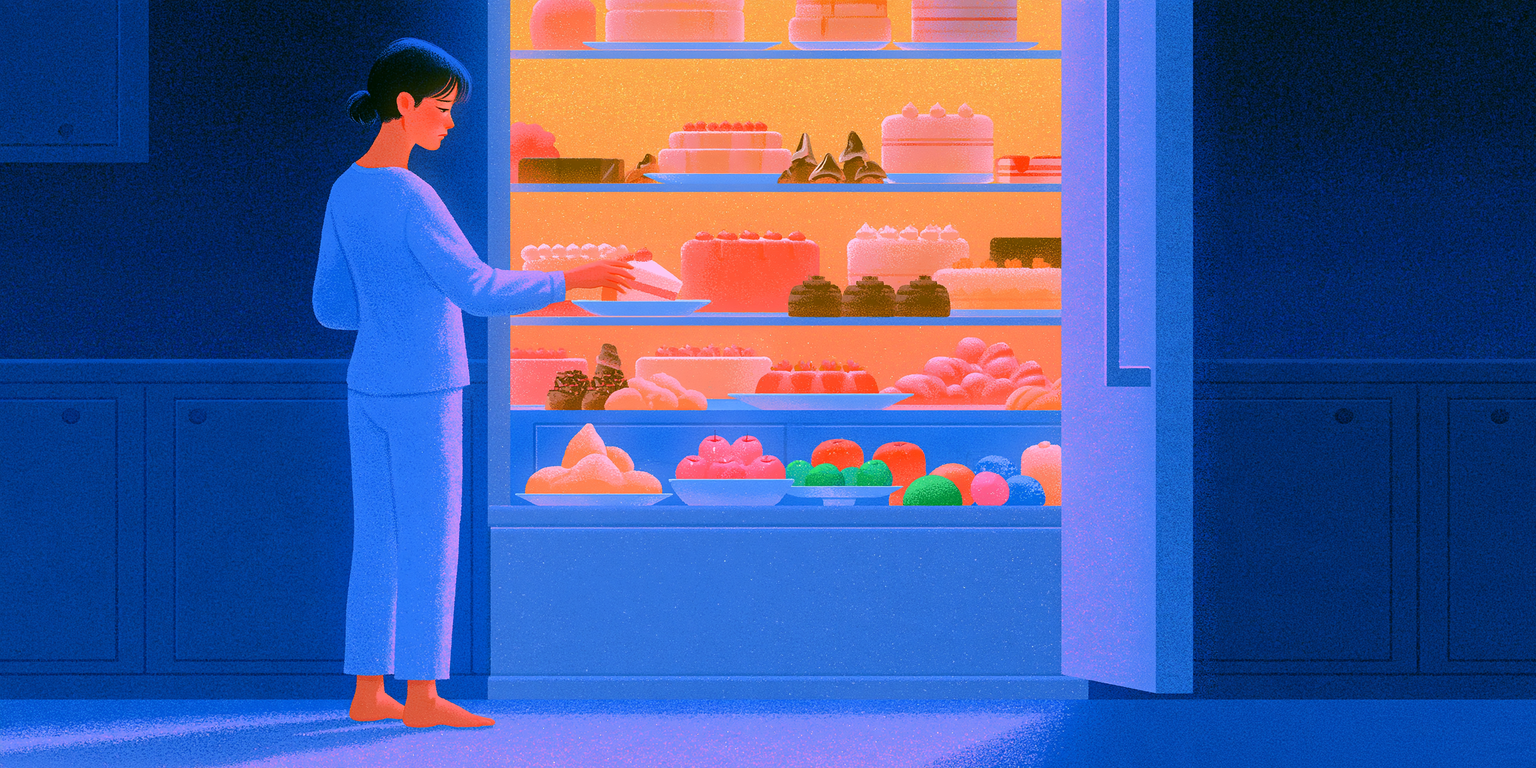
If you find yourself raiding the fridge at night or reaching for crisps every afternoon, it is not a lack of willpower and it is not your fault. Cravings are a normal brain and body response to specific triggers, and many of those triggers can be spotted and changed.
Note: this article is for general education and is not medical advice. Cravings for non-food items such as ice, clay, starch or soil (pica), cravings with unexplained weight loss, or intense thirst should be discussed with a doctor.
Do cravings mean you're missing something?
The idea that the body "knows" what it needs and creates a craving to match is appealing, and it holds up for a few basic signals. Thirst reliably tracks water. Salt appetite does rise in some animals and people after salt loss. But for most specific foods, such as chocolate, cheese, peanut butter or pickles, research has not found a reliable link to a nutrient shortfall.
A good illustration is chocolate. If chocolate cravings were a sign of magnesium deficiency, eating something richer in magnesium, such as nuts or spinach, would satisfy them. It does not. Chocolate cravings also vary strongly between cultures: they are common among women in the United States, especially around a period, and much less common in some other countries, which points to learned and cultural patterns rather than biology alone.
What does reliably drive cravings:
Short or broken sleep, which shifts appetite hormones and makes high-calorie food more rewarding.
Stress, through cortisol and the comfort value of food. Our article on stress eating and emotional hunger covers this loop.
The menstrual cycle: many women notice stronger cravings in the days before their period.
Long gaps between meals and very restrictive diets, which make the next food choice more extreme.
Habit and cues: the same time of day, the same room, the same screen.
Fluid and salt loss from sweating, illness or some medicines.
Real deficiencies come into this list in a few specific cases, explained below.
Why am I craving salt?
Salt cravings are among the most searched cravings, and they have the clearest physical explanations:
Sweating and fluid loss. Heavy exercise, a hot climate, a sauna, vomiting or diarrhoea all lose sodium. A desire for salty food afterwards is a reasonable response.
Low blood pressure and orthostatic intolerance. People with low blood pressure or conditions such as POTS often crave salt, and some are advised by their doctor to increase it. That decision belongs with a clinician, because extra salt raises blood pressure.
The menstrual cycle and pregnancy. Many women report wanting salty food before a period; salt and pickle cravings are common in pregnancy.
Stress, boredom and habit. Crisps, salted nuts and fast food are designed to be hard to stop eating.
Dehydration and some medicines. Diuretics increase sodium loss.
What vitamin deficiency causes you to crave salt? There is no vitamin deficiency that typically causes salt cravings. The rare medical cause doctors think of is Addison's disease (primary adrenal insufficiency), in which the adrenal glands make too little cortisol and aldosterone. It typically comes with a cluster of symptoms: severe tiredness, weight loss, dizziness or fainting on standing, nausea, low mood and sometimes darkening of the skin, especially in creases and scars (3). A salt craving on its own, in someone who feels otherwise well, is very unlikely to be Addison's.
What does craving salt mean, then, for most people? Usually: you have lost fluid and salt, you are tired or stressed, or it is a habit. Drink some water, eat a proper meal, and notice whether the craving comes after exercise, heat, a short night or a particular time in your cycle.
Why am I craving sweets and sugar?
What deficiency causes sugar cravings? None reliably. Chromium and magnesium are often named online, but there is little evidence that sugar cravings signal a lack of either in people who eat a normal diet.
The stronger explanations are:
Sleep loss. In a controlled study, two nights of restricted sleep lowered leptin, the "I'm full" hormone, raised ghrelin, the hunger hormone, and increased hunger and appetite, especially for calorie-dense, carbohydrate-rich food (4). Many people notice this as an afternoon or late-night sugar craving after a short night.
Long gaps without food, or meals that are mostly refined carbohydrates, which can leave you hungry again quickly.
Stress and low mood, when sweet food is a quick comfort.
The days before a period, when appetite and cravings commonly rise.
Habit: dessert after dinner, a biscuit with coffee, a sweet at 4 pm.
Why am I craving sweets all of a sudden? A sudden change usually has a sudden reason: a new stressor, a run of short nights, a change in medicine, the start of a new cycle phase, a new diet that cut carbohydrates sharply, or giving up smoking or alcohol. Pregnancy is another common cause.
Is craving sugar a sign of diabetes? Not usually by itself. The classic signs of high blood sugar are increased thirst, passing more urine, tiredness, blurred vision, slow-healing cuts and unexplained weight loss (5). If you have those, ask for a blood glucose or HbA1c test. People who already have diabetes and take insulin or some tablets can crave sugar when their blood sugar drops too low, which needs to be treated promptly.
Why am I craving ice?
Craving ice, and chewing it compulsively, is the craving with the best evidence for a deficiency. It is called pagophagia, a type of pica, and it is strongly associated with iron deficiency. The NHS lists wanting to eat non-food items such as paper or ice among the symptoms of iron deficiency anaemia (1).
Why iron deficiency causes this is not fully understood.
If you crave ice, especially with tiredness, breathlessness, heavy periods, hair shedding or pregnancy, ask for a full blood count and ferritin (2). Other forms of pica, such as craving clay, soil, starch or chalk, also need medical attention, both because they can signal deficiency and because the substances themselves can be harmful (6). Constant ice chewing can also damage teeth.
Chocolate, milk, cheese, peanut butter, pickles and meat
Why am I craving chocolate? Chocolate is sweet, fatty and associated with comfort and reward, and chocolate cravings are particularly common before a period. Chocolate contains magnesium, but there is no good evidence that cravings are caused by magnesium deficiency.
Why am I craving milk or cheese? Some people link these to calcium, but there is no good evidence that dairy cravings indicate low calcium. More likely reasons are habit, comfort, hunger, the fat and salt in cheese, or, for milk, soothing heartburn.
Why am I craving peanut butter? It is calorie-dense, salty-sweet and filling, which makes it an easy craving when you are hungry or have been under-eating. There is no specific deficiency linked to it.
Why am I craving pickles? Pickles combine salt and sourness. Salt loss, low blood pressure, pregnancy and the days before a period are common contexts. Pickle juice is also popular among athletes for cramps.
Why am I craving meat? A meat craving can follow a period of eating little protein, intense exercise, or a change to a mostly plant-based diet. Some people with iron deficiency describe wanting red meat, but this is anecdotal; a ferritin test is a better guide than the craving.
Why am I craving carbs? Short sleep, long gaps between meals, intense exercise, stress and the premenstrual phase are the usual reasons, along with very low-carbohydrate diets, which often make carbohydrate cravings stronger.
Why am I always craving water?
Thirst is the one "craving" that is a direct physiological signal. Feeling thirsty after heat, exercise, salty food, alcohol or coffee is normal. Persistent, excessive thirst with passing large amounts of urine is different and can be a sign of high blood sugar, so it is worth a blood test (5). Some medicines cause a dry mouth that feels like thirst. Rarely, constant thirst can be linked to kidney or hormone conditions.
Cravings in pregnancy and before a period
Cravings are very common in pregnancy, including for salty, sweet, sour and spicy food, fruit and dairy. Most are harmless. Cravings for ice, clay, starch or other non-food items in pregnancy should be reported to your midwife or doctor, because they can be linked to iron deficiency and some substances are unsafe (6).
Before a period, many women notice stronger cravings, especially for sweet and salty food, together with bloating and lower mood. If cravings are part of a pattern of severe premenstrual symptoms that affect daily life, it is worth discussing with a doctor, as effective treatments exist.
How to handle cravings without fighting yourself
Cravings respond better to changing their triggers than to willpower alone:
Protect sleep first. A short night is one of the most reliable sugar-craving triggers. Even one earlier bedtime or a steadier wake time can make the next day easier.
Do not run on empty. Regular meals with protein and fibre reduce extreme cravings later in the day.
Drink water after heat or exercise, and include some salt in a meal if you have sweated a lot.
Notice your cycle. Expect stronger cravings before a period and plan for them rather than fighting them.
Break the cue. If the craving arrives at the same time and place every day, change the routine around it: a walk, a different snack, a different room.
Allow the food sometimes. Strict bans tend to make cravings louder. A planned portion is often easier than an all-or-nothing rule.
Check for a deficiency only when there are other signs, especially for ice cravings, tiredness or heavy periods.
Living with cravings: the questions people ask next
Can a vitamin supplement stop sugar cravings?
There is little good evidence that any vitamin or mineral supplement reliably stops sugar cravings in people who are not deficient. Chromium and magnesium are often marketed for this, but trials are small and inconsistent. Improving sleep, eating regular meals with protein and fibre, and reducing stress tend to have a bigger effect. If cravings come with tiredness or heavy periods, test for iron deficiency before buying a supplement.
Is craving ice a sign of anaemia?
Craving and chewing ice is strongly associated with iron deficiency, with or without anaemia. It is not proof of anaemia on its own, but it is a good reason to ask for a full blood count and ferritin, especially if you also feel tired, breathless, have heavy periods or are pregnant. Long-term ice chewing can damage teeth.
Why do I crave salt before my period?
Many women notice salt and sugar cravings in the days before a period. Hormonal changes in the late luteal phase affect appetite, fluid balance and mood, and food becomes a quick source of comfort. These cravings are common and usually harmless. If premenstrual symptoms are severe or affect daily life, a doctor can discuss treatments.
Does craving salt mean I need more salt?
Sometimes, after heavy sweating, illness with vomiting or diarrhoea, or in people with low blood pressure, a salt craving reflects real salt loss. For most people eating a typical diet, it does not. Most people already eat more salt than recommended, which raises blood pressure. If you have a condition such as POTS, ask your doctor how much salt is right for you rather than following the craving.
Can stress cause food cravings?
Yes. Stress raises cortisol and changes appetite, and many people reach for sweet, salty or fatty foods for quick comfort. Short sleep, which often comes with stress, adds to the effect. Recognising the pattern, such as cravings after difficult meetings or late at night, makes it easier to change the routine around it rather than relying on willpower.
Should I worry about craving non-food items?
Yes, it is worth telling a doctor. Craving and eating non-food substances such as clay, soil, chalk, starch, paper or large amounts of ice is called pica. It can be linked to iron or other deficiencies, pregnancy, and some developmental and mental health conditions, and some substances can cause poisoning or blockages. A doctor can check blood tests and help address the cause.
Before you blame yourself
People often feel ashamed of cravings, especially when they end in a late-night snack they had promised themselves to skip. But cravings are not a moral failing. They are a predictable response to short sleep, stress, hormones, long gaps without food, and foods designed to be hard to stop eating.
Looking at what came before a craving is more useful than criticising what came after. A run of short nights, a hard week, the days before a period, a skipped lunch: these show up again and again. Change one of them and watch whether the cravings ease over the following weeks.
When to see a doctor
See a doctor if you crave ice, clay, starch or other non-food items; if salt cravings come with severe tiredness, dizziness on standing, weight loss or darkening skin; if you have constant thirst and pass a lot of urine; or if cravings are part of binge eating that feels out of control.
Call 911 if you feel very dizzy or faint, are confused or very drowsy, have severe abdominal pain, severe or persistent vomiting, severe muscle weakness or a seizure, especially if you have Addison's disease or diabetes (3, 7).
How to bring this up with your doctor
What to ask for, by name. For ice cravings: "Could we check a full blood count and ferritin?" For thirst: "Could we check blood glucose or HbA1c?" For salt cravings with tiredness and dizziness: "Could this be related to my blood pressure or adrenal glands?"
What to bring. A few weeks of notes: what you craved, when, how much sleep you got the night before, where you were in your cycle, any heavy sweating or illness, and all medicines and supplements you take.
What to say, out loud. "I've been craving [ice / salt] almost every day for [N] weeks, and I also have [tiredness / dizziness / heavy periods]. Could this be a sign of something like iron deficiency?"
If you are told it's just stress. Ask: "Is there a simple blood test that would rule out the medical causes, so we can be sure?"
How long until you notice a difference? Most supplements take weeks, not days. See how long supplements take to work, and how to tell if one is working.


Start understanding your body
Learn what affects your energy, stress, sleep, and daily state. Get the app.
How Welltory helps — and what it cannot do
The limits first. Welltory is a general wellness product, not a medical device. It does not measure iron, sodium, blood sugar or any nutrient, and it cannot tell you why you have a craving or diagnose any condition.
What it can do is show you the conditions that tend to come before cravings, so you can see your own triggers instead of guessing.
Sleep the night before. Sleep Analysis uses Apple Watch or Oura data on iOS and syncs sleep from Samsung Health, Fitbit or Garmin Connect through Health Connect on Android (Sleep Analysis for Android). On iOS with Apple Watch or Oura, Battery starts each morning from your resting heart rate on waking and the quality of your sleep (Today screen). Compare craving days with the night before.
Tag the craving. On iOS with Apple Watch or Oura, when Welltory marks a stress or rest episode and asks "What happened?", tap, type or talk: "sugar craving", "salty snack", "skipped lunch", "PMS", "long run in heat". Over weeks, My Patterns shows which tags tend to appear in your stress episodes and which in recovery; some sections need a paid plan. If "sugar craving" keeps appearing on days after short sleep or stressful afternoons, you have found a trigger to work on.
A record for your doctor. From the web app you can export a CSV (Dashboard → choose a chart → Export) (export guide) to bring alongside your notes. Patterns are associations to discuss with your doctor, not proof of what causes a craving.
How we made it
We based this article on NHS guidance on iron deficiency anaemia, the NIH Office of Dietary Supplements iron fact sheet, NHS guidance on Addison's disease, diabetes and pica, a controlled study of sleep restriction and appetite hormones, and MedlinePlus guidance on urgent warning signs. Search questions came from what people in the United States most often ask about food cravings. For the product section, we checked every function against the Welltory Help Center on October 21, 2026.
Made with AI tools, then edited and fact-checked by the Welltory team. See our Editorial & AI policy.
Jane Smorodnikova, co-founder of Welltory, built the methodology behind how we read physiological data.
Written by Tatsiana Yashyna.


Discounts for blog readers: up to 36% off
See what affects your energy, stress, sleep, and daily state with Welltory
This article is for educational purposes only and is not medical advice. Supplements can interact with medicines and are not right for everyone; talk to your doctor or pharmacist before starting, stopping or combining them, especially if you are pregnant, breastfeeding, have kidney or liver disease or take prescription medicines. Call 911 if you feel very dizzy or faint, are confused or very drowsy, have severe abdominal pain, severe or persistent vomiting, severe muscle weakness or a seizure, especially if you have Addison's disease or diabetes. Welltory is a general wellness product and does not diagnose, treat or prevent any condition. Sources were retrieved on October 21, 2026.
Was this helpful?
Ask AI for a summary of page


Written by Jane Smorodnikova

The founder and CEO of Welltory. A recognized tech leader with two Master's degrees and experience at MIT, she has scaled Welltory to over 17 million users.
Written by Tatsiana Yashyna

Deputy COO at Welltory. With a background in medicine and years of working with health data, she translates research and real physiological signals — sleep, stress, heart rate, and hormones — into clear, evidence-based explanations that help people understand what their bodies are telling them.
References
- NHS. Iron deficiency anaemia. https://www.nhs.uk/conditions/iron-deficiency-anaemia/
- National Institutes of Health, Office of Dietary Supplements. Iron: fact sheet for health professionals. https://ods.od.nih.gov/factsheets/Iron-HealthProfessional/
- NHS. Addison's disease. https://www.nhs.uk/conditions/addisons-disease/
- Spiegel K, Tasali E, Penev P, Van Cauter E. Brief communication: sleep curtailment in healthy young men is associated with decreased leptin levels, elevated ghrelin levels, and increased hunger and appetite. Annals of Internal Medicine 2004;141(11):846–850. https://doi.org/10.7326/0003-4819-141-11-200412070-00008
- NHS. Diabetes. https://www.nhs.uk/conditions/diabetes/
- NHS. Pica. https://www.nhs.uk/conditions/pica/
- MedlinePlus (US National Library of Medicine). Recognizing medical emergencies. https://medlineplus.gov/ency/article/001927.htm


