

Short Answer
Bloating before a period is common. In the late luteal phase — the stretch after ovulation and before bleeding — progesterone and estrogen rise, then drop if pregnancy doesn’t happen. That hormone shift can make your tissues hold onto more fluid, especially if you’ve had more salt than usual, so your belly may feel tight, puffy, or heavier even if nothing “serious” is happening. Progesterone can also relax gut smooth muscle, which may slow movement through the bowel for some people; that’s one reason constipation during period symptoms, gas, and fullness can cluster around the same days. (ncbi.nlm.nih.gov)
For most people, bloating before a period starts a few days to about a week before bleeding. PMS symptoms can also begin one to two weeks before your period, and they usually ease once bleeding starts or within the first few days of flow. So if you’re wondering how long does period bloating last, the usual pattern is: it builds premenstrually, peaks close to day 1, then settles as your period gets going. (medlineplus.gov)
It’s normal enough that “period bloating look pregnant” is a real-life way many people describe the visible swelling, not just the feeling. But severe bloating before period every cycle, bloating that stops following your cycle, or bloating with pain, weight loss, vomiting, diarrhea that wakes you up, blood in stool, or a major change in bowel habits deserves a clinician’s review. (mayoclinic.org)
Period bloating at a glance
Period bloating usually shows up in the late luteal phase — the stretch after ovulation and before bleeding — so you may notice it anywhere from about two weeks to a couple of days before your period, with many people feeling it most in the last few days. It often eases once flow starts, although PMS-type symptoms can linger into the first few days of bleeding. (my.clevelandclinic.org)
The “why” is partly fluid and partly gut speed. Hormone changes before a period can make your body hold onto more water, so your abdomen may feel puffy or tight. Progesterone can also slow gastrointestinal motility, which means gas and stool move through more slowly — that’s why bloating before a period can overlap with fullness, gas, and constipation during period days. (mayoclinic.org)
For most people, cyclical bloating is common and usually normal. The pattern matters: if it comes predictably before your period and fades after bleeding begins, it fits a typical premenstrual pattern. If it is severe every cycle, constant, worsening, or no longer tied to your cycle, it deserves a clinician’s review. (my.clevelandclinic.org)
It can also feel confusing because early-pregnancy bloating can mimic premenstrual bloating. A missed period is the bigger clue; if your period doesn’t come, a home pregnancy test is more reliable after the first day of a missed period. (mayoclinic.org)
Why bloating happens before a period
Premenstrual bloating is part of the broader premenstrual symptom picture. Premenstrual syndrome is described in the research as “a common hormone-related condition marked by recurrent physical and affective symptoms that can substantially impair daily functioning” — and abdominal bloating, fullness, bowel-habit changes, breast tenderness, fatigue, appetite changes, irritability, anxiety, and low mood are all commonly reported in the luteal phase, the stretch after ovulation and before bleeding starts. (pmc.ncbi.nlm.nih.gov)
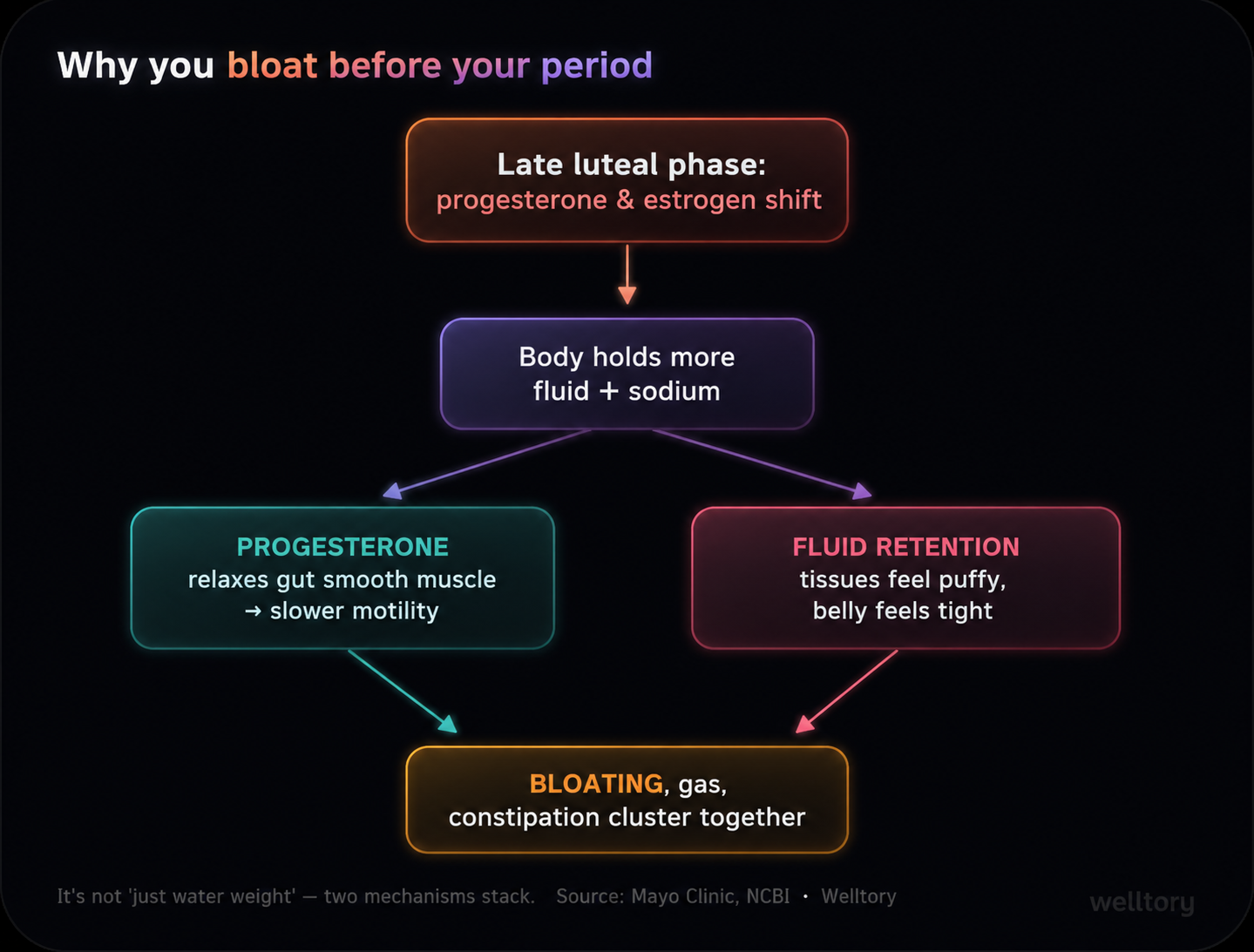
The mechanism is hormonal, but it is not “just water weight.” After ovulation, progesterone rises; as your period gets closer, progesterone and estrogen shift again. Those changes can make your body hold on to more fluid and sodium, so tissue feels puffier and your abdomen may feel tighter. At the same time, progesterone can affect smooth muscle in the gut and is commonly linked with slower bowel movement or constipation in some people — which is why bloating before a period, gas, and constipation during period days can cluster together instead of feeling like separate symptoms. (mayoclinic.org)
How long does period bloating last?
For most people, bloating before a period follows the PMS pattern: it builds in the last few days before bleeding starts, sometimes up to about a week beforehand, and then eases during the first days of menstruation as estrogen and progesterone drop and the next cycle begins. Mayo Clinic notes that PMS symptoms can start about 7 to 10 days before a period and usually fade within the first few days of bleeding; abdominal bloating is one of the listed physical symptoms. (mayoclinic.org)
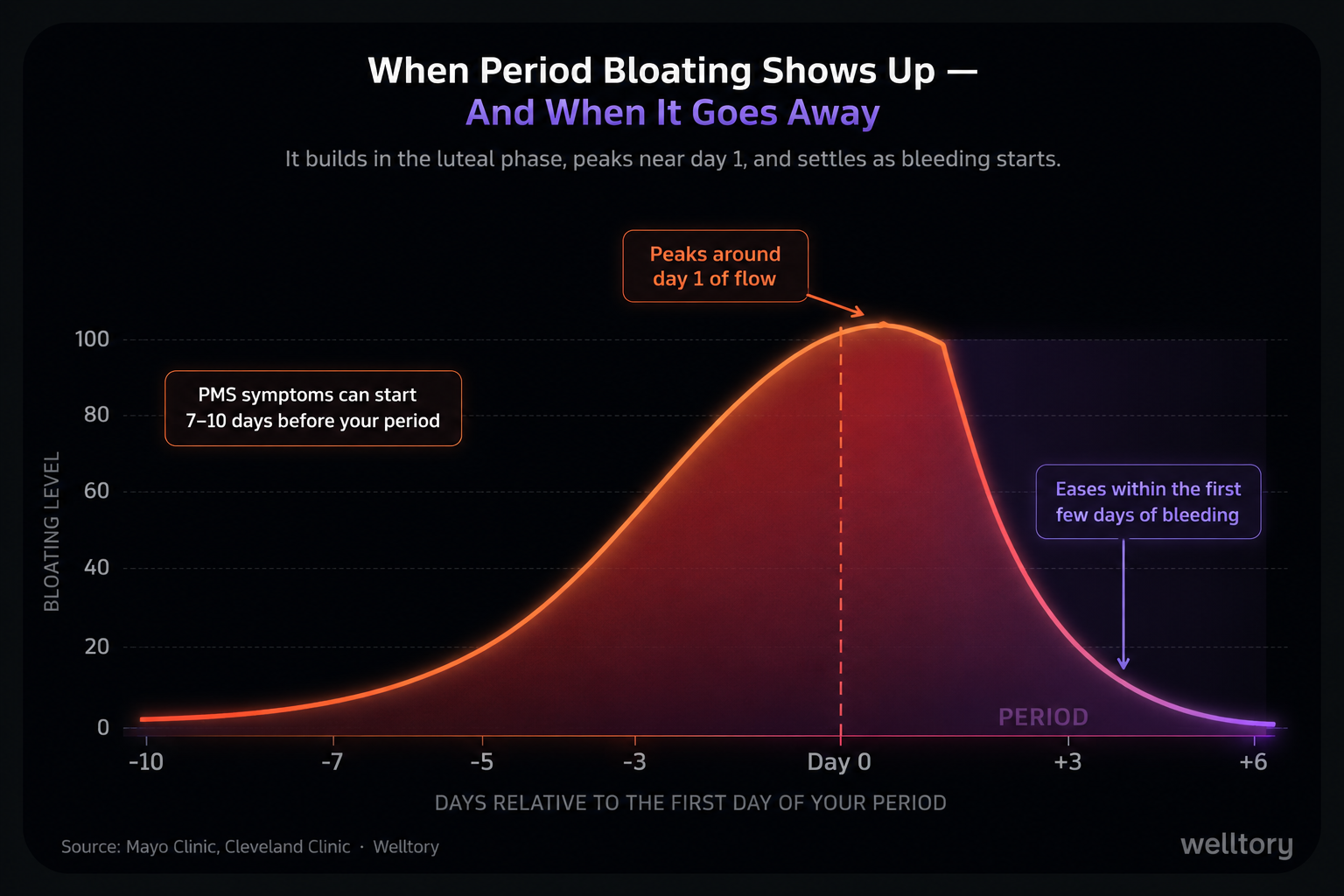
A shorter, water-retention-heavy version is also common: your belly may feel fuller in the day or two before your period, especially if you are more salt-sensitive that cycle, slept poorly, or had more stress. Mayo Clinic describes premenstrual water retention and bloating as common in the days before menstruation, while Cleveland Clinic explains that the menstrual phase starts when the uterine lining sheds after estrogen and progesterone fall. (mayoclinic.org)
So, if you’re asking how long does period bloating last, a typical range is: a few days before your period through day 1 or 2 of flow, sometimes lingering into the first several days. But bloating that keeps going well into or beyond your period every cycle — or shows up no matter where you are in your cycle — is a different pattern. Bring it up with a clinician, especially if it is new, worsening, painful, or paired with changes in bowel habits, heavy bleeding, unexplained weight loss, vomiting, or fever. Cleveland Clinic advises checking in when periods or symptoms change significantly, become extremely painful, or are accompanied by severe symptoms. (my.clevelandclinic.org)
"I look pregnant" — visible distension vs the feeling of bloating
When you say, “I look pregnant before my period,” you may be describing two body experiences that can overlap but aren’t the same. The first is visible distension: your abdomen actually looks larger, your waistband digs in, or your usual clothes feel tight. The second is bloating: that tight, full, stretched, pressurized feeling inside your belly, even if the outside change is subtle. Research separates them for a reason: “Abdominal distension is an objective visible sign of increased abdominal girth,” while “bloating is a feeling of abdominal fullness and discomfort.” Studies on visible abdominal distension also describe it as a measurable increase in abdominal circumference, not “just in your head.” (United European Gastroenterology Journal, DOI 10.1002/ueg2.70098)
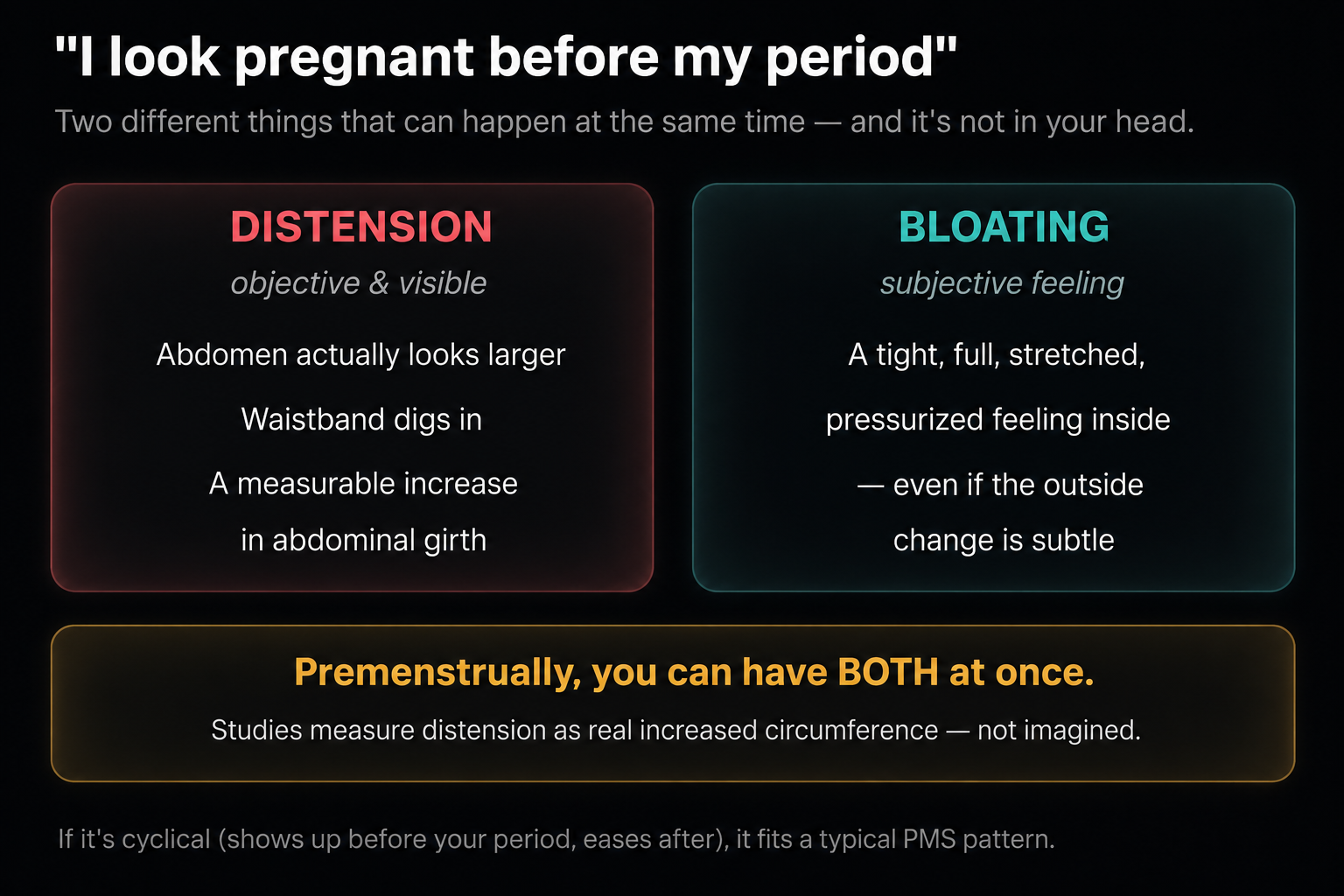
Premenstrually, you can have both at once. Hormone shifts before bleeding starts can come with PMS symptoms like bloating, weight changes, constipation, diarrhea, pelvic discomfort, and a gassy feeling. That mix can make your abdomen feel crowded from the inside and look rounder from the outside — the classic period bloating look pregnant pattern. (medlineplus.gov)
Most of the time, this kind of pre-period distension is cyclical: it shows up in the days or week before your period, repeats in a recognizable pattern, and eases once bleeding starts or soon after. That pattern matters. A belly that gets noticeably bigger before your period and then settles down is much more consistent with PMS-type bloating than with a constant, progressive abdominal change. (medlineplus.gov)
Still, “common” doesn’t mean you have to ignore it. If the swelling is new for you, severe, keeps worsening, does not improve after your period, or comes with red-flag symptoms like significant pain, vomiting, unexplained weight loss, blood in stool, fever, or major changes in bowel habits, it’s worth checking in with a clinician instead of assuming it’s just hormones.
Period bloating vs early-pregnancy bloating
Early-pregnancy bloating and bloating before a period can feel almost identical because both sit in the same hormonal neighborhood: your gut can slow down, your tissues can hold more fluid, your breasts may feel sore, your mood can shift, and constipation can show up too. That’s why symptoms alone are a shaky way to tell the difference. Mayo Clinic notes that bloating in early pregnancy can feel similar to bloating at the start of a menstrual period, while PMS can also include abdominal bloating, breast tenderness, fatigue, and constipation or diarrhea. (mayoclinic.org)
The practical divider is what happens next. If bleeding arrives roughly when you expected it and the bloating eases as your period starts or within the next few days, premenstrual bloating is the more likely explanation. If your period is clearly late — especially by about a week or more — or you have a missed period with a positive home pregnancy test, pregnancy becomes more likely. Mayo Clinic also cautions that many early pregnancy signs are not unique to pregnancy, so a test is what turns suspicion into useful information. (mayoclinic.org)
“Extreme bloating early pregnancy 1 week” is tricky because one week is often too early for symptoms to prove much. You may feel gassy, full, or constipated before either a period or a positive test. If you test too soon, a home test can be falsely negative; Cleveland Clinic says testing is the only way to know for sure and that home tests can be taken as soon as you miss your period, with too-early testing increasing the chance of a false negative. (my.clevelandclinic.org)
Easing cyclical bloating — general measures
If your bloating predictably shows up before your period and then fades once bleeding starts, the goal is usually not to “flush” your body overnight. It is to make the luteal phase easier on your gut and your fluid balance. Start with the boring things that work because they match the physiology: cut back on salty and highly processed foods, drink enough water, keep your body moving gently, and go easy on fizzy drinks and alcohol. Salt can pull more water into your tissues; processed foods are often high in salt and fat; dehydration can worsen constipation; and walking or stretching can help your bowels keep moving instead of letting gas and stool sit there. Cleveland Clinic also recommends fewer salty, fatty, sugary foods and less alcohol in the two weeks before a period to help with PMS symptoms. (my.clevelandclinic.org)
Think of this as reducing the “inputs” that make bloating feel louder. Carbonated drinks add swallowed gas. Alcohol and beer can irritate digestion and add carbonation. A heavy, salty meal may make the same hormonal water retention feel much more dramatic the next morning. You do not need a perfect diet; you need a few lower-friction days when your body is already more prone to water retention, slower motility, and constipation. (health.clevelandclinic.org)
Some people ask about digestive enzymes or probiotics for bloating and gas. The honest picture: probiotics are not one universal treatment. Effects depend on the strain, the condition being treated, and the outcome being measured; NIH’s Office of Dietary Supplements notes that probiotics may reduce some IBS symptoms, including bloating and flatulence, but that better trials are still needed to identify the right strain, dose, duration, and IBS subtype. A systematic review also emphasizes that results from one probiotic strain should not be generalized to others. So “which probiotic is best for diarrhea and bloating?” or “best digestive enzymes for bloating and gas” is not a question with one reliable product answer. (ods.od.nih.gov)
Digestive enzymes are similarly specific. Lactase can help some people with lactose intolerance because it breaks down lactose, the sugar in milk; NIDDK describes lactase tablets or drops as an option for some people with lactose intolerance, while also advising people to check with a doctor before using them. That is very different from taking a broad enzyme blend for predictable premenstrual bloating. Treat probiotics and enzymes as “ask a clinician or pharmacist” options, not first-line self-treatment — especially when the bloating is cyclical, mild-to-moderate, and already expected to resolve on its own. (niddk.nih.gov)
When cyclical bloating is more than normal
Cyclical bloating should have a rhythm: it builds before your period, then eases once bleeding starts or soon after. If your belly feels swollen or tight all the time, if the pattern is steadily worsening, or if heavy, bad, excessive, or severe bloating before a period starts coming with pain, fever, vomiting, weakness, bleeding, unexplained weight loss, or a new change in bowel habits, don’t write it off as “just hormones.” Bloating can happen with common digestive conditions, including constipation and IBS, but persistent or moderate-to-severe bloating can also point to issues that need assessment, especially when alarm symptoms are present. (mayoclinic.org)
A sudden episode is different, too. If you woke up with stomach pain and diarrhea, that may be a short-lived gut infection or food-related irritation — but it is not the usual pattern of period bloating. Get medical advice promptly if diarrhea lasts more than two days, you feel dehydrated, the pain is severe, stools are bloody or black, or there is fever; seek urgent care for severe abdominal pain with swelling, marked tenderness, ongoing vomiting, weight loss, or other worrying symptoms. (mayoclinic.org)
Severe premenstrual symptoms deserve the same seriousness. If bloating arrives with mood changes, panic, rage, depression, insomnia, or a sense that you are not safe in your own body every cycle, the issue may be PMS or premenstrual dysphoric disorder (PMDD), not a normal monthly inconvenience. PMDD is “associated with higher suicidality and reduced functioning,” and “diagnosis and treatment can improve symptoms.” If you have thoughts of self-harm or suicide, call or text 988 in the U.S.; if you or someone nearby is in immediate danger, call 911 or go to the nearest emergency room. (pmc.ncbi.nlm.nih.gov)
Physiology context: stress, recovery, and how you feel a cycle
Cyclical symptoms don’t happen in a vacuum. In the late luteal phase, your body is already adapting to normal hormone shifts; if you’re also underslept, overworked, anxious, or recovering poorly, the same amount of fluid retention, gut slowing, or abdominal pressure can feel louder. PMS commonly includes abdominal bloating, fatigue, trouble sleeping, appetite changes, constipation, diarrhea, tension, and mood symptoms — so the “period bloat” you feel in your belly may arrive with a whole-body pattern, not as an isolated gut event. (mayoclinic.org)
Stress can add another layer. A stress response raises heart rate, breathing, blood pressure, and muscle tension; chronic stress may also worsen digestive and sleep problems. That doesn’t mean stress “causes” bloating before a period, or that you can think your way out of symptoms. It means your nervous system, sleep, digestion, and cycle can stack on top of each other. On a high-load week, your abdomen may feel tighter, your pain threshold may be lower, your cravings may be stronger, and constipation during period days may be harder to ignore. (nccih.nih.gov)
Welltory does not measure your gut, estrogen, progesterone, or whether bloating is hormonal. What it can help you track qualitatively is the context around your symptoms: heart rate variability, stress, and recovery trends across the month. HRV reflects autonomic nervous system activity, and research has examined HRV changes across menstrual-cycle phases and sleep in women with and without severe premenstrual symptoms. So if bloating tends to feel worst on the same days your recovery reads low or your stress reads high, that overlap can be useful — not as a diagnosis, but as a qualitative cue to protect sleep, lower training intensity, plan easier meals, hydrate, and avoid treating every bloated day like a personal failure. (pubmed.ncbi.nlm.nih.gov)
How we made it
Made with AI tools, then edited, fact-checked, and medically reviewed by the Welltory team.


Discounts for blog readers: up to 36% off
See what affects your energy, stress, sleep, and daily state with Welltory
This article is for educational purposes only and does not replace medical advice. Cyclical bloating is common, but bloating that is severe, constant, worsening, or comes with pain, weight loss, bleeding, or changes in bowel habits should be checked by a clinician. Welltory does not diagnose or measure GI or hormonal conditions.
Was this helpful?
Ask AI for a summary of page


Written by Jane Smorodnikova

The founder and CEO of Welltory. A recognized tech leader with two Master's degrees and experience at MIT, she has scaled Welltory to over 17 million users.
Written by Kseniia Iaroslavtseva

She reviews scientific research and turns it into structured, readable insights.
Reviewed by Anna Elitzur
-2.jpg)
With her medical degree, Anna reviews Welltory's health content for medical accuracy and alignment with current clinical guidelines and research.
References
- Melchior C, Hammer H, Bor S, et al. https://pubmed.ncbi.nlm.nih.gov/40844856/
- Premenstrual Syndrome and Nutritional Factors: A Narrative Review of Current Evidence and Clinical Implications https://pmc.ncbi.nlm.nih.gov/articles/PMC12898590/
- Border G, Miller YD. https://pmc.ncbi.nlm.nih.gov/articles/PMC12779906/
- Cleveland Clinic. https://my.clevelandclinic.org/health/diseases/24288-pms-premenstrual-syndrome
- Cleveland Clinic. https://my.clevelandclinic.org/health/articles/9709-pregnancy-am-i-pregnant
- Cleveland Clinic. https://my.clevelandclinic.org/health/symptoms/21740-bloated-stomach


