
New survey finds 9 in 10 Americans have had a toxic boss in their career
A new Welltory survey finds 91% of Americans have worked for a toxic boss — and tolerance for it is running out

Survey overview
We use "toxic boss" the way we use "toxic ex," a piece of vocabulary that has been stretched across so many experiences it barely means anything anymore. A bit difficult. A little critical. Maybe just demanding. We file it away, move on, and privately assume that the people who couldn't handle it were the problem.
A new survey of 300 Americans by Welltory suggests we have been filing it away for too long.
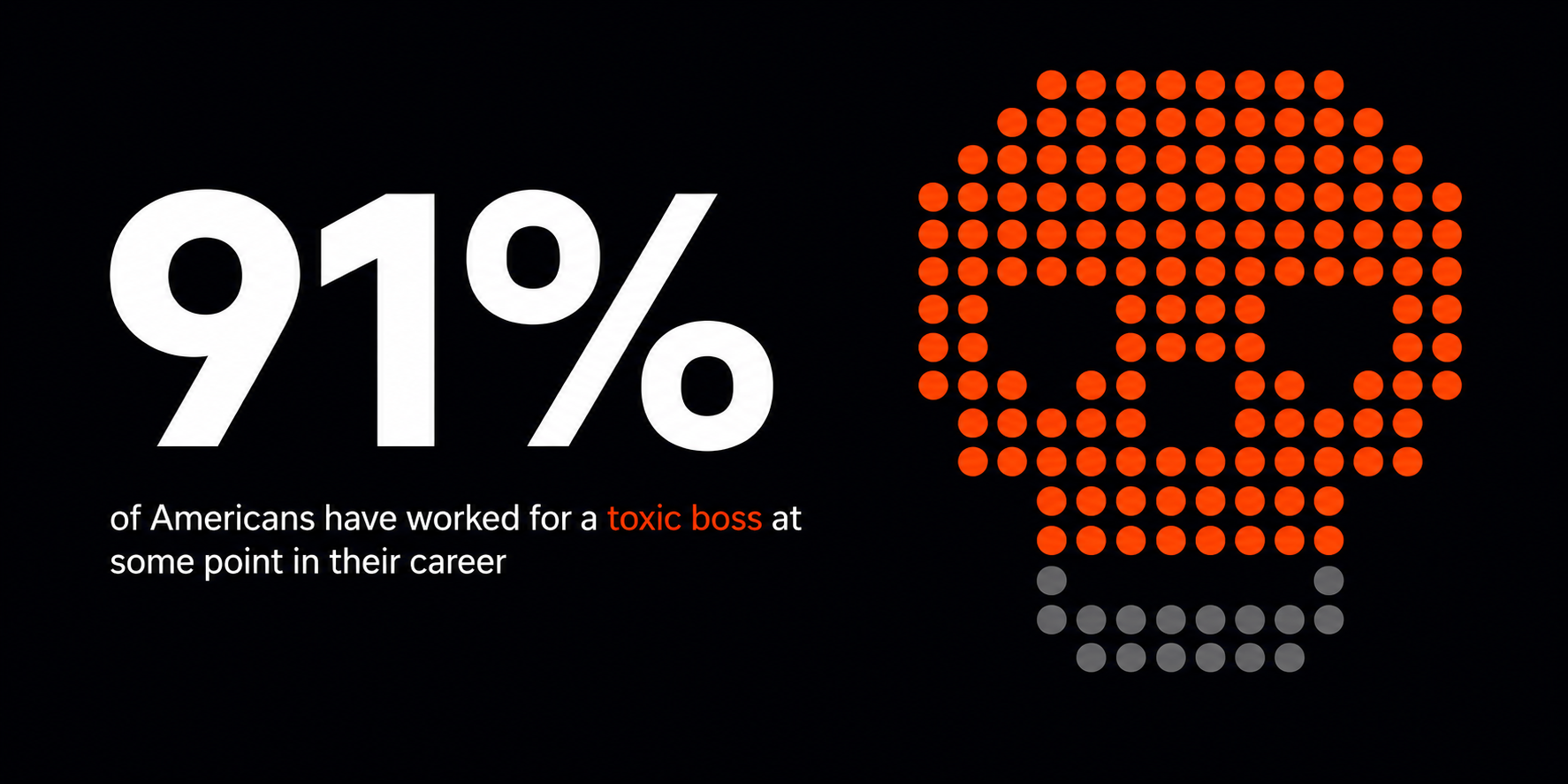
9 in 10 Americans (91%) said they have worked under a manager they would describe as toxic at some point in their career, with 34% working currently under a toxic boss. Not in a past job they've processed and moved past. Today.
That reframes the entire conversation. Because when something happens to nine out of ten people, it stops being a story about bad luck or weak employees or difficult personalities. It becomes a story about the structure of work itself.
The cost of toxic leaders
The impact of toxic management extends beyond workplace frustration. It shows up in how people feel, function, and recover from work.
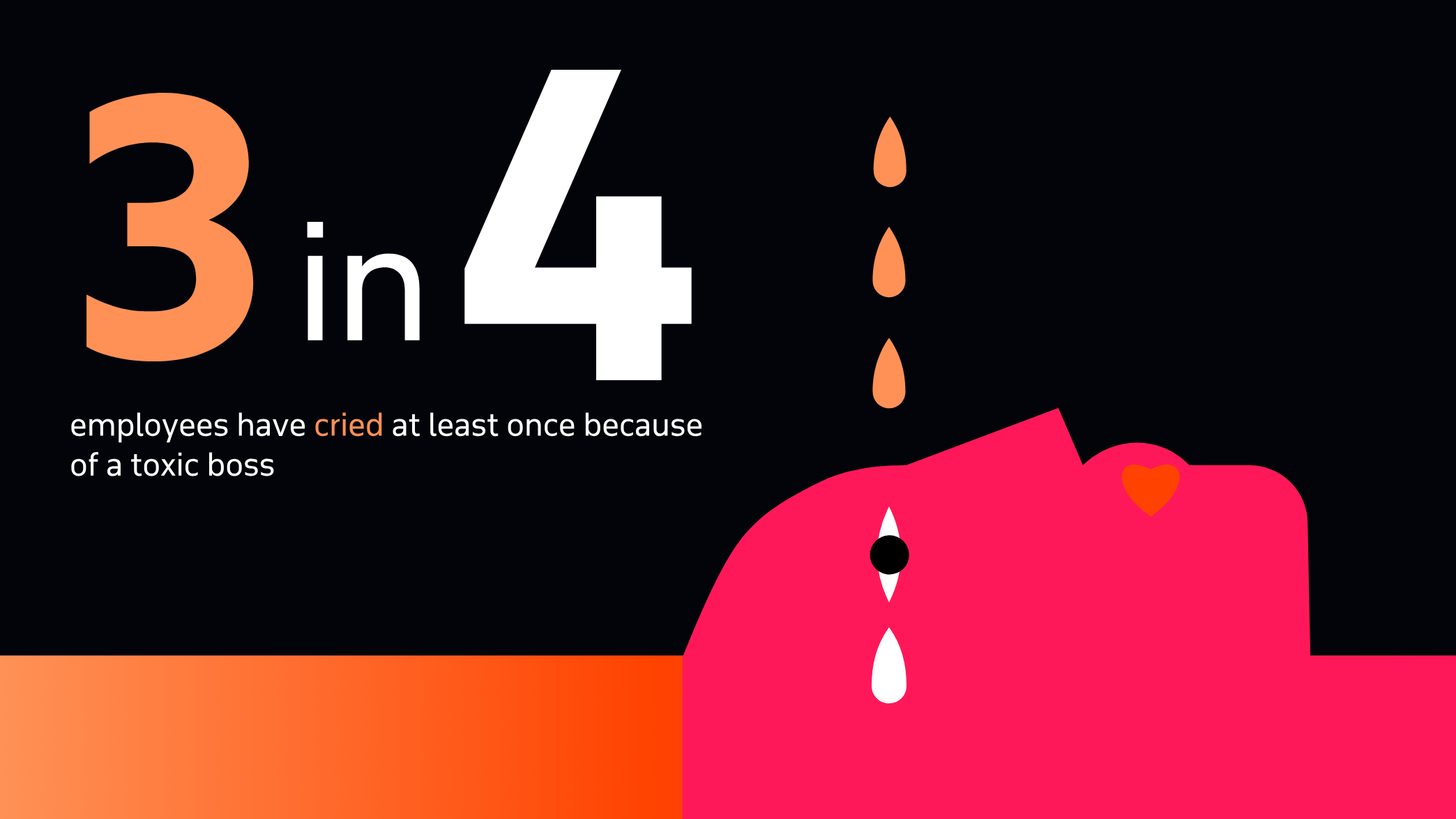
73% of respondents said they have cried because of a boss at least once in their career.
That means more than 7 in 10 Americans have reached a point where work didn't just feel stressful but it became emotionally overwhelming enough to break through.
From there, the strain becomes harder to separate from daily life. 86% said they experienced anxiety or dread before work, while 82% reported burnout, suggesting a sustained emotional pressure rather than isolated stress.
The effects do not stay only in the mind. 84% reported physical symptoms such as headaches and fatigue, and 72% said their sleep was affected, showing how easily work-related stress moves into the body.
And for many, it does not stop at work either. Nearly half (47%) said it affected their personal relationships, extending the impact into life outside the office.
Taken together, the findings suggest something less visible but more lasting: toxic leadership does not stay at work. It follows people out of it.
What toxic behaviours in managers look like
Toxic management rarely arrives as a single dramatic moment. It accumulates, in patterns, repeated often enough that they start to feel normal.
The most common was favoritism within teams (67%), where recognition and opportunities felt uneven and based more on preference than performance.
Next was a breakdown in clarity and accountability. 64% said they received unclear instructions and were later blamed for the outcome, leaving them responsible for expectations that were never clearly defined.
The third was constant unnecessary pressure. 57% reported being given urgency for tasks that were not actually time-sensitive, creating a continuous sense of urgency without real reason.
Beyond these, respondents also reported other recurring behaviours:
- 52% said they were expected to be available outside working hours
- 50% said their manager took credit for their work or ideas
- 50% experienced public criticism or being embarrassed in front of others
- 45% said they were made to feel guilty for PTO or sick leave
- 42% said they were contacted during vacation or while on leave
- 41% said they were compared negatively to coworkers
Perceptions of fairness were not limited to management behaviour alone, with 30% of respondents saying they believe attractive or more stylish employees are treated better in their workplace, suggesting that bias is sometimes seen as extending into everyday interactions as well.
What toxic leadership pushes people to do
The impact of toxic management does not only shape how people feel at work. It also shapes the decisions they make about staying, leaving, or simply trying to get through the day.
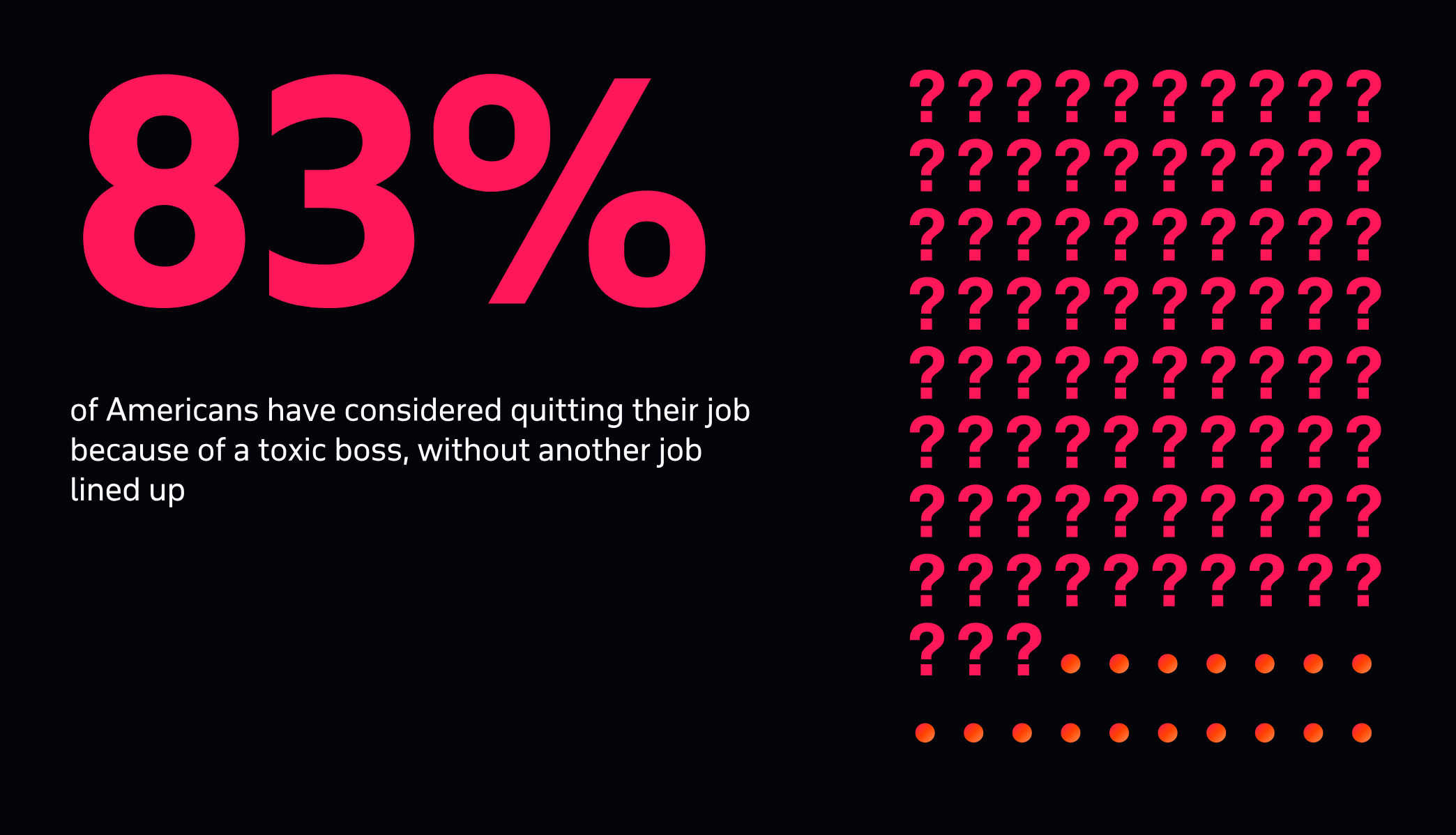
For many, the pressure reaches a breaking point. 83% of respondents said they had considered quitting their job without another one lined up because of a toxic boss, and 31% of those said they actually did. For a significant share, leaving was not planned but it was a response to a situation that became unsustainable.
Others looked for smaller ways to create distance. 51% said they had called in sick at least once to avoid their boss, using short-term absence as a way to cope.
The trade-offs people are willing to make are just as telling. 39% said they would sacrifice salary, while 26% said they would give up promotion opportunities if it meant leaving a toxic manager.
Even when framed as career acceleration, most draw a clear line. 65% said they would not tolerate a "Miranda Priestly" type of boss, even if it fast-tracked their career.
The data suggests that tolerance for toxic leadership is no longer tied to ambition alone.
What this says about modern work
For a long time, the implicit contract of professional ambition ran like this: absorb the pressure, tolerate the difficult people, and you will be rewarded. Endurance was a virtue.
These numbers suggest that the contract is being renegotiated. Not loudly, but in the accumulation of individual decisions like the resignation without another job, the sick day taken as self-protection, the salary willingly sacrificed to get out.
People are still ambitious. But they are revising the terms of what they will absorb to get there. The tolerance for toxic leadership is not rising. It is, breaking point by breaking point, running out.


Discounts for blog readers: up to 36% off
See what affects your energy, stress, sleep, and daily state with Welltory
Was this helpful?
Ask AI for a summary of page


Written by Mariia Ermatova
Project manager and brand advocate at Welltory. She helps turn complex health data into engaging stories and meaningful user experiences.